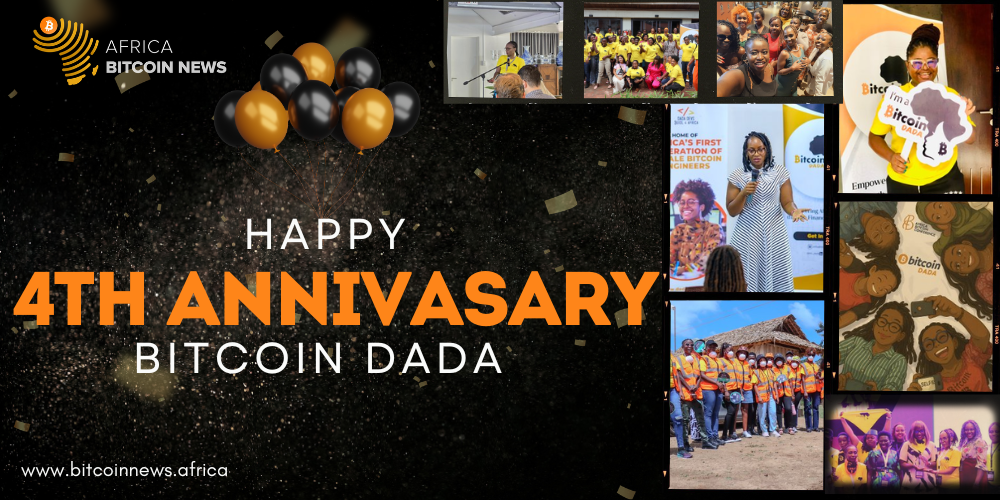
In an era where financial systems often operate as barriers rather than bridges, a grassroots movement is fundamentally rewriting the African labor and economic narrative. On May 5, 2026, Bitcoin Dada celebrated its 4th anniversary, marking its evolution from a small circle of curious observers into a transformative Pan-African force for financial freedom.
With 10 cohorts completed and over 1,500 women educated across 13 countries, Bitcoin Dada has moved beyond simple literacy. It is now a critical engine for “Proof of Work,” shaping the professional futures of women across Africa.
The Genesis: Language, Liberty, and "Dada"
The story began in 2022. Lorraine Marcel, a Kenyan events planner, realized that while Bitcoin offered a solution to Africa’s soaring inflation and high remittance costs, the gateway to entry was blocked by jargon and “tech-bro” culture.
She founded Bitcoin Dada, Dada meaning “sister” in Swahili, to provide a high-trust, low-pressure environment. The mission was clear: strip away the intimidation and focus on Bitcoin as a practical tool for the African context.
"Women come in with curiosity, and over time, build confidence and clarity in how Bitcoin works and how it can be used in real life."

Unlike generic crypto bootcamps, Bitcoin Dada’s six-week curriculum prioritizes community over code. Students don’t just learn “number go up”; they learn how the Lightning Network can facilitate everyday payments and how Bitcoin acts as a hedge against local currency volatility.
The results of this focused approach are staggering. In just four years, the initiative has:
Expanded to 13 countries: Creating a borderless network of female educators and builders.
Launched “Dada Devs“: A specialized track for female engineers contributing to open-source Bitcoin projects.
Established “Dada Hub“: Africa’s first physical Bitcoin and AI hub in Kenya, serving as a sanctuary for innovation and in-person collaboration.
Recommended reading
Once a Dream, Now Reality: Inside Dada Hub, Africa’s First Bitcoin Developer Space for Women
Now more than ever, the organization’s message is clear: African women will not be “onboarded” as afterthoughts. They are being positioned as the architects of the future of money.
The Road Ahead: Cohort 11
As African economies continue to navigate currency hurdles, the need for permissionless financial tools has never been greater. Marcel’s vision remains steadfast: if women don’t participate in building this future, they risk being excluded from it.
Applications are now open for Cohort 11, featuring a beginner-friendly curriculum grounded in real-world African use cases.
“There is still more to learn, more women to reach, and more work to be done,” the organization shared. “And we are just getting started.”