
Ethiopia Climbs to 8th Largest Bitcoin Mining Country in the World
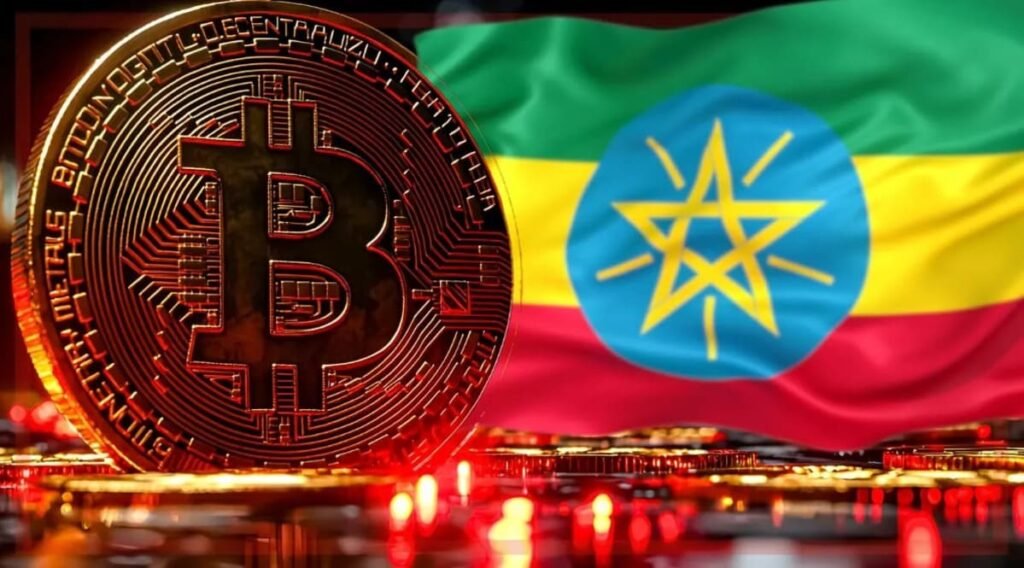
Ethiopia has officially crossed a major threshold. The East African country is now the 8th largest Bitcoin mining nation in the world. Furthermore, it accounts for roughly 2.7% of the global Bitcoin network hashrate. Ethiopian Bitcoin miner and advocate Kal Kassa announced the milestone, and BitcoinKE first reported it.
In simple terms, every 10 minutes the Bitcoin network produces roughly 3 BTC in block rewards. Of those rewards, about 3% now flow through Ethiopia. Therefore, the country has moved from “emerging hashrate hub” to a name that sits alongside the world’s biggest Bitcoin economies.
From 2.5% to 2.7%, and still climbing
The jump did not happen overnight. In 2024, Ethiopia contributed roughly 2.5% of the global Bitcoin hashrate. By early 2026, that figure climbed to 2.7%. Moreover, the trajectory is steeper than it looks on paper.
Kassa shared the breakdown at a recent industry event. According to him, 94 private limited companies now operate in Ethiopia across data centres, cloud services, and crypto mining. Notably, all of them are registered as foreign direct investment companies. Together, they spend about $30 million per month on electricity from Ethiopia Electric Power (EEP). That single line item makes up roughly 20% of EEP’s total revenue.
In addition, EEP’s projected Bitcoin mining-linked revenue for 2026 sits at around $350 million. For context, the same agency earned only about $55 million from miners in the first 10 months of 2024. Clearly, the curve is bending sharply upward.
How a hydropower project became a mining engine
Ethiopia’s rise rests on one foundation: cheap, clean, and abundant hydroelectric power. The Grand Ethiopian Renaissance Dam (GERD) sits at the centre of the story. The dam is Africa’s largest hydropower project. Furthermore, it has an installed capacity of just over 5,000 megawatts, which is more than double the country’s current electricity demand.
That mismatch creates a problem and an opportunity at the same time. The country generates more power than it can consume. As a result, much of that energy would otherwise dissipate. Bitcoin miners step in here. They buy what Kassa calls “stranded energy” — power that is generated but not immediately needed. In short, miners turn surplus electrons into revenue.
Companies like BitFuFu, BIT Mining, and Munich International Mining (MIM) have moved aggressively into the country since China banned Bitcoin mining in 2021. For instance, BIT Mining acquired a 51 MW facility and nearly 18,000 mining rigs for $14.3 million, according to CoinDesk.
The government wants in
Until recently, Ethiopia’s mining boom was a private-sector story. However, that is changing fast. In January 2026, the Ethiopian government officially announced that it is seeking investment partners to help build and operate Bitcoin mining infrastructure directly.
Speaking at the Finance Forward Ethiopia 2026 conference, Prime Minister Abiy Ahmed confirmed that Ethiopian Investment Holdings (EIH), a state-owned holding company under the Office of the Prime Minister, is now actively recruiting partners. Specifically, EIH wants partners who can bring capital, mining technology, and operational expertise to a national Bitcoin mining initiative.
Crucially, the model is changing. So far, Ethiopia has earned revenue from miners by selling them electricity. Going forward, the state itself plans to mine. According to Kassa, EIH is expected to own 20–30% of the mega facilities being set up in the country. Therefore, the government is moving from landlord to operator.
The tension: miners vs. domestic users
Of course, the story is not all upside. Roughly half of Ethiopia’s population still lacks reliable access to electricity. Naturally, that has triggered public debate about whether Bitcoin miners are getting preferential treatment over households and domestic industries.
EEP CEO Ashebir Balcha addressed the question directly. According to him, the strategy is temporary, not permanent. “Until the people have full access and the economy starts to consume this power, we’re using Bitcoin for transition,” he said. “It’s not a permanent endeavour.”
Following earlier public backlash, EEP also announced it was suspending the issuance of new electricity permits to crypto and data mining companies. Still, existing operators continue to expand. Meanwhile, the government keeps signing new strategic deals at the holding-company level.
Why this matters for Africa
Ethiopia’s climb to 8th place globally is a continental story, not just a national one. For years, the dominant narrative around Bitcoin mining centred on the United States, China, Kazakhstan, and Russia. Now, an African country sits firmly in the top 10 — and arguably in the top 5 in terms of growth rate.
Several factors make Ethiopia’s case especially interesting for the rest of Africa:
- Renewable energy as a competitive moat. Ethiopia mines almost entirely on hydropower. Therefore, the country sidesteps the “dirty Bitcoin” criticism that haunts coal-heavy mining hubs.
- State participation as a model. Most African countries either ignore or restrict Bitcoin. Ethiopia, by contrast, is moving toward direct state participation in mining revenue.
- Stranded energy as a development tool. Many African grids waste power. Bitcoin mining offers a way to monetise that waste while infrastructure catches up.
In other words, Ethiopia is running a real-world experiment. The question is simple: can a developing country use Bitcoin mining to fund infrastructure, attract foreign direct investment, and modernise its grid at the same time? So far, the early numbers suggest yes.
What to watch next
A few signals will tell us where Ethiopia is heading from here.
First, watch the hashrate share. Industry voices have predicted Ethiopia could hit 7% of the global hashrate if domestic mining capacity scales toward 1 gigawatt. At 2.7% today, the country still has significant room to grow.
Second, watch the EIH partnership announcements. The terms of those deals will signal how serious the state is about owning hashrate, not just selling power.
Third, watch the regulatory balancing act. EEP has already paused new permits once. If domestic electricity access continues to lag, more pauses could follow.
Finally, watch the rest of Africa. The Democratic Republic of Congo is already exploring clean Bitcoin mining inside Virunga National Park. Likewise, smaller players in Kenya, Malawi, and Zambia are building grassroots mining operations on local mini-grids. Ethiopia’s success could turn a quiet trend into a continent-wide strategy.
For now, one thing is clear. A nation that, as recently as 2023, barely registered on global hashrate charts is now the 8th largest Bitcoin mining country in the world. That is not just a Bitcoin story. That is an African economic transformation story — and it is only getting started.
Sources
- BitcoinKE — Ethiopia is Now the 8th Largest Bitcoin Miner in the World — https://bitcoinke.io/2026/02/ethiopia-among-largest-bitcoin-miners-globally/
- CoinDesk — How Ethiopia’s Low Energy Costs Allow BIT Mining to Recycle its Bitcoin Machines — https://www.coindesk.com/business/2025/01/07/how-ethiopia-s-low-energy-costs-allow-bit-mining-to-recycle-its-bitcoin-machines
- Bitcoin Magazine — Recounting Ethiopia’s Bitcoin Developments in 2024 — https://bitcoinmagazine.com/culture/recounting-ethiopias-bitcoin-developments-in-2024-
- CryptoSlate — Ethiopia’s Bitcoin Mining Surge Now Accounts for 2.5% of Global Hashrate — https://cryptoslate.com/ethiopias-bitcoin-mining-surge-now-accounts-for-2-5-of-global-hash-rate/
- Mariblock — Ethiopia Earns $55 Million from Bitcoin Mining Deals in 10 Months — https://www.mariblock.com/ethiopia-earns-55-million-from-bitcoin-mining-deals-in-10-months/