Kibera Women Build a Bitcoin Circular Economy in Africa’s Largest Informal Settlement

COMMUNITY ECOSYSTEM

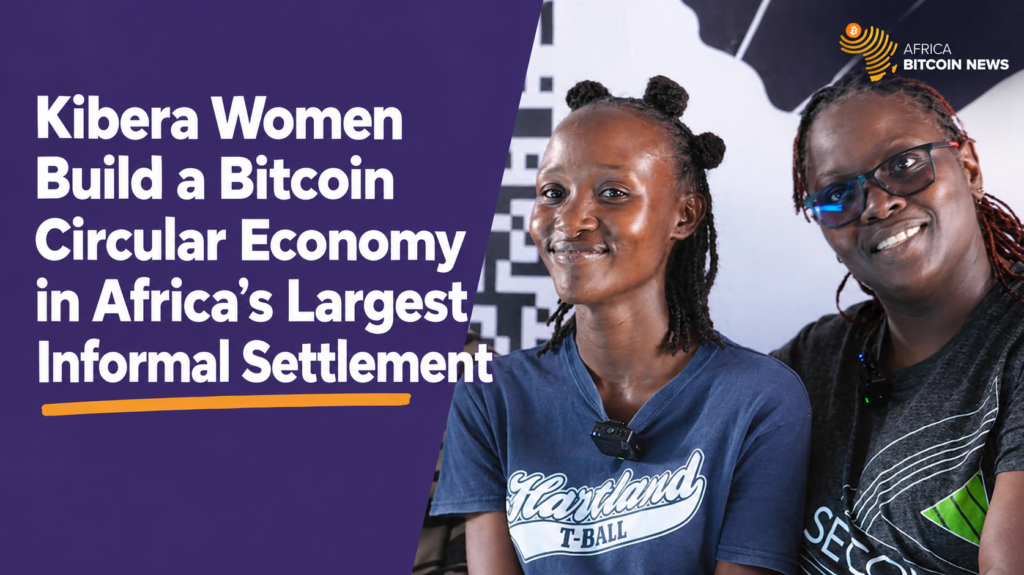
In Kibera, Africa’s largest informal settlement, a group of women is turning discarded clothes into income, savings, and community value, all denominated in Bitcoin.

They collect unwanted garments door-to-door, transform denim, yarn, and fabric into bags, dolls, and crochet clothing, and pay and get paid in satoshis.

The initiative, Afribit Kibera, shows what happens when practical skills meet independent Bitcoin education in one of Africa’s most financially excluded communities.

My First Bitcoin, the nonprofit focused on open-source Bitcoin education, recently shared the story in a new video and on X, highlighting how education underpins the entire circular economy.

How Afribit Kibera’s Upcycling Team Works

Catherine and the upcycling team collect discarded clothes from neighbors. They sort, clean, and remake the materials into sellable products. Contributors and buyers transact in Bitcoin via Lightning wallets.

Bitcoin solves a practical barrier for many participants. Without national identification documents, opening a conventional bank account is difficult or impossible.  Teen mothers in particular use the system to earn, save, and set aside sats for their children’s future.

Mercy Akalo, founder of the Tu Many Dadas Initiative, teaches young mothers the three core actions: earn, save, and spend. Spending is emphasized because it demonstrates that Bitcoin functions as real money rather than a scam. The group stresses that visible, local use builds trust faster than abstract explanations.

The broader Afribit effort, associated with Ronnie Mdawida and local collaborators, also connects waste collectors, boda boda riders, dancers, and the upcycling group. Value stays inside the community when people earn and spend sats with one another.

Early support included incentives linked to waste collection; education has been the consistent foundation for expanding participation.

Education Turns Skepticism into Use

Many residents first encountered “crypto” through scams or pyramid schemes. Classroom and door-to-door teaching from groups connected to The Core and Bitcoin Dada provides a clearer framework: what money is, why fixed-supply Bitcoin differs from fiat, and how to hold, send, and receive sats safely.

Participants learn that Bitcoin’s 21-million-coin limit and decentralized nature make it different from previous promises. Price drops are sometimes viewed as buying opportunities once the supply schedule is understood. Practical sessions cover wallet setup, Lightning payments, and the importance of verifying transactions rather than trusting intermediaries.

My First Bitcoin’s open-source materials, including the Bitcoin Diploma, support this work. The organization has shifted from its original El Salvador focus to a global network of educators and communities. Its materials are designed to be adapted locally, and graduates often become teachers themselves.

Part of a Larger Kenyan Story

The Afribit Kibera video fits into My First Bitcoin’s documentary series Bigger Than Bitcoin. Episode 1, focused on Kenya, follows educators, circular economies, youth programs, women-led projects, and waste-to-value initiatives across Nairobi, Kibera, Githurai, and nearby areas.

Across the circular economies featured, more than 150 merchants have participated, and hundreds of people have completed the Bitcoin Diploma through The Core, with some going on to start their own groups.

The series treats Bitcoin as a tool rather than the main character. The people educators, merchants, waste collectors, and mothers saving for their children, are the focus.

My First Bitcoin has indicated additional episodes will look at other regions, continuing the pattern of showing grassroots education on the ground.

Practical Takeaways and Next Steps

The Kibera example illustrates several repeatable elements:

  • Start with education that addresses local problems (financial exclusion, waste, skills).
  • Pair learning with earning so participants immediately use what they learn.
  • Encourage spending inside the community so value circulates.
  • Scale carefully, master one village or neighborhood before expanding.

Afribit Kibera’s approach of learning in one area, improving skills (including better waste-processing tools and tech training), and then replicating is deliberate.

Environmental side benefits include reduced fabric waste and less material blocking drains.

ENJOYED THIS ARTICLE?Support the authorSend a zap over Lightning or on-chain