Beyond Grants and Goodwill.
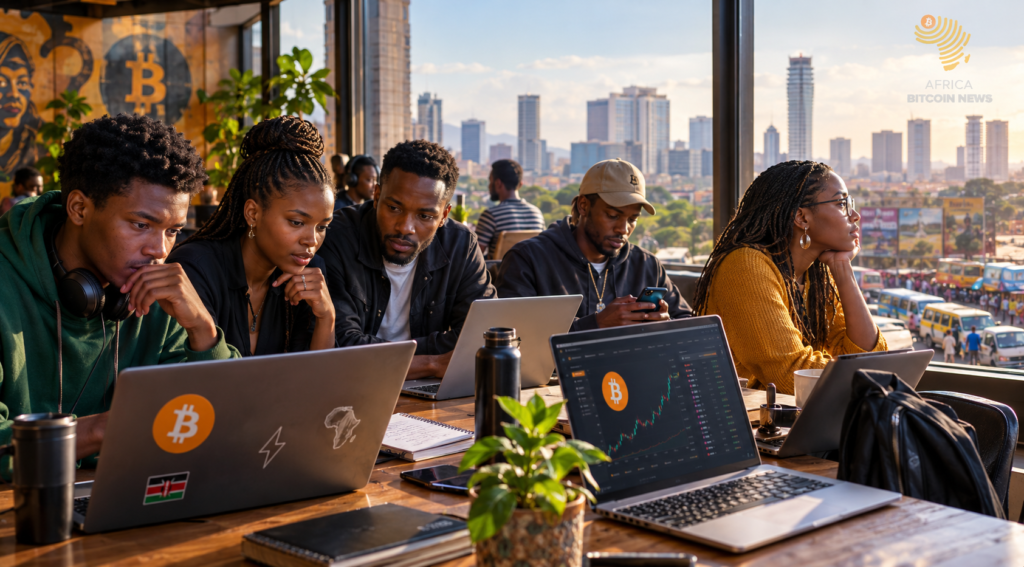
Beyond The Passion.
You learned about Bitcoin.
You watched the videos.
You joined the Telegram groups.
You attended a meetup or a workshop.
You set up a wallet and received your first sats.
You believed.
Now comes the quieter, harder question that many people are afraid to ask out loud:
How do I actually earn a living from Bitcoin in Africa without waiting for the next grant?
This is one of the most important and least discussed pain points in the African Bitcoin ecosystem today.
The Success Story We Like to Tell.
Over the past few years, Africa has seen real progress.
Education programmes have reached thousands.
Meetups have grown in cities across the continent.
Circular economies have shown that people can spend sats.
Conferences have brought global attention.
Grants have funded community builders, educators, and developers.
The passion is real.
The knowledge is spreading.
The belief is strong.
But belief does not pay rent.
Belief does not feed a family.
Belief does not create a career path.
What Gap Still Exists?
Look closely at the opportunities available to most African Bitcoiners and a pattern appears.
Many roles are:
- Short-term grants or fellowships
- Volunteer or community-builder positions
- Project-based work that ends when the funding ends
- Broader crypto or exchange jobs that are not Bitcoin-only
True, full-time, market-driven Bitcoin jobs roles inside companies that make products, process payments, build infrastructure or solve real commercial problems remain limited relative to the number of people who have been activated.
Has the ecosystem become very good at creating believers but
slower at creating employers?
Why This Matters More Than Another Workshop.
When most sustainable income in the space still depends on external grants, several quiet problems grow:
- Talented people eventually leave for traditional tech or other industries.
- Community builders burn out after years of underpaid or unpaid work.
- Young people who are excited about Bitcoin struggle to see a long-term future in it.
- The ecosystem remains dependent on the funding cycles of organisations outside the continent.
Grants have been essential. They helped plant the seeds.
But an ecosystem that cannot create enough paid work beyond grants will always remain fragile.
The Personal Questions Worth Asking.
Sit with these for a moment:
- After everything you have learned about Bitcoin, can you see a realistic career path for yourself inside it?
- How many people do you know who work full-time on Bitcoin in Africa without relying on grants?
- If the major grant programmes slowed down tomorrow, what would happen to the jobs that currently exist?
- Are we building an economy around Bitcoin — or mostly a community that still needs to be funded from outside?
These questions are not meant to create discouragement.
They are meant to create clarity.
What does a Healthier Future Looks Like?
A mature Bitcoin ecosystem in Africa will not only educate and inspire.
It will also employ.
That means more commercial companies that:
- Build Bitcoin products people actually pay for
- Hire local talent into full-time roles
- Create career ladders from junior to senior positions
- Generate revenue from real usage rather than only from grants
It also means community members and builders starting to ask different questions: Not only “How do we get more people into Bitcoin?”
But also “How do we create companies that can pay people to work on Bitcoin?”
Education opened the door.
Meetups reduced isolation.
Grants gave early oxygen.
The next layer is employment.
What Can be Done.
If you are still new to Bitcoin, do not be discouraged. The space is young. The opportunity is still being built.
But build with open eyes.
Learn skills that companies actually need — development, design, operations, compliance, product, customer support, and local market knowledge.
Support Bitcoin businesses that are trying to become sustainable rather than only grant-dependent.
If you have the capacity, start something that can eventually pay other people.
And if you already work in the ecosystem, ask the harder internal question:
Are we creating enough real jobs or mostly creating more people who will need jobs?
The Quiet Truth.
Passion is powerful.
Community is essential.
Education is foundational.
But an ecosystem that cannot turn belief into livelihoods will eventually lose many of the people it worked so hard to reach.
The next chapter of Bitcoin in Africa will not only be written by how many people understand it.
It will also be written by how many people can build a life from it.
The question is no longer only “Do you believe in Bitcoin?”
The deeper question is:
Can Bitcoin in Africa become a place where belief can also become a career?
Get the Weekly Brief
Essential African Bitcoin news, curated for builders. No spam.
"*" indicates required fields