
Ethiopia Cuts Bitcoin Mining Power by 75%. Here Is What Actually Happened and What It Means.
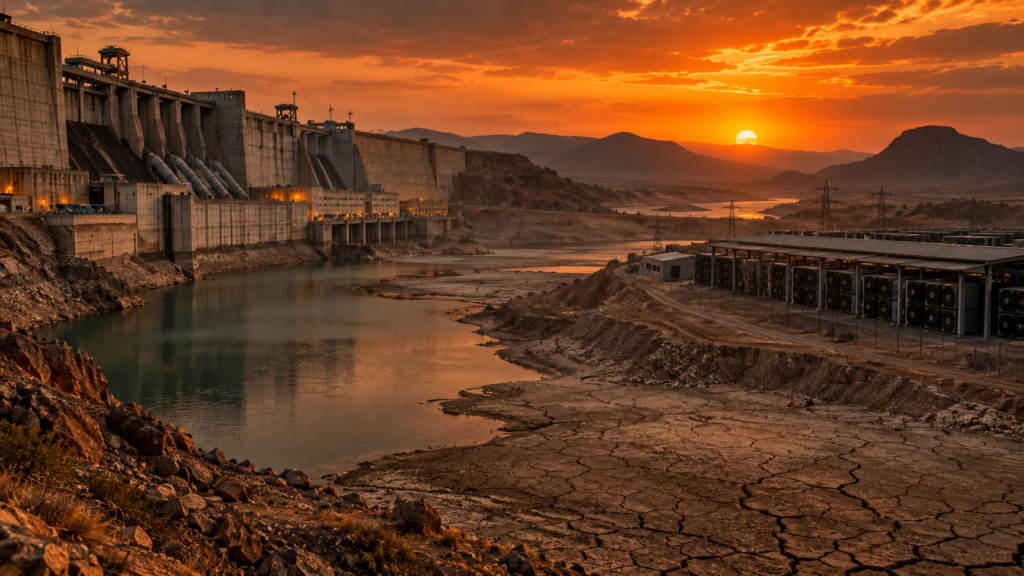
Ethiopia’s Bitcoin mining industry is facing its most serious disruption since operations began. Ethiopian Electric Power has slashed power supply to its Bitcoin mining industry by three-quarters as the country grapples with reduced inflows into its hydroelectric dams. Specifically, miners are now receiving just 23% of their contracted electricity volume, down from the 98% guarantee written into their power purchase agreements. Bloomberg
EEP CEO Ashebir Balcha made the disclosure at the corporation’s annual performance briefing in Addis Ababa on Friday, saying the reduction was deliberate and pre-emptive rather than the result of unforeseen technical failure. Furthermore, he was direct about where data mining ranks in the corporation’s order of priorities. “Data mining and energy exports are secondary priorities for us, our primary focus is our public and domestic industries,” he said, noting that despite complaints lodged by affected data mining clients, EEP would not restore their supply “while leaving our people in the dark.” Ethiopianbusinessreview
The CEO said the corporation would reassess its position in October, once clearer data on generation capacity for the new water year becomes available, and would then decide whether to increase or further reduce supply to the segment. If reservoir levels stay low, further cuts are possible. Electricity exports to neighbouring countries could also face restrictions. EthiopianbusinessreviewTFTC
What triggered the cut
The cause is a combination of El Niño and seasonal hydrology. The cut in power supply is primarily due to reduced inflows into Ethiopia’s hydroelectric dams, which generate about 95% of EEP output. CEO Ashebir Balcha said the reduction was a pre-emptive measure ahead of a dry period, with incoming water levels tracking at least 20% below expectations. Consequently, EEP adjusted its revenue and supply forecasts and reported losses of up to 50 megawatts per generating unit as reservoir levels declined. CryptoNews.com
EEP had signed power purchase agreements with 39 Bitcoin mining companies, with 31 already operational. Under the agreements, the utility had committed to providing miners with at least 98% of their contracted electricity. The gap between 98% guaranteed and 23% delivered is not a rounding error. It is a sovereign utility choosing its political constituency over its most profitable commercial customer — and doing so openly. Trendsnafrica
The financial scale of the hit
The numbers behind this decision are striking. Bitcoin mining companies accounted for 35% of EEP’s revenue in the past financial year and consumed almost a third of the nation’s total production of 9,730 megawatts. Furthermore, miners generated 50.37 billion birr in the past fiscal year, more than any other customer category, yet became the first to be rationed when water got scarce. BloombergTFTC
EEP has already cut its electricity export revenue forecast by 40% to $279 million. Therefore, the financial impact runs in both directions. Miners lose hashrate and revenue. EEP loses its single most profitable customer segment at exactly the moment its generation capacity is constrained. Cryptoworldheadline
What this means for miners on the ground
A 75% power reduction does not slow a mining operation by 75%. It strands it. Rigs that cannot draw power stop producing hashrate and stop earning, while the capital tied up in them keeps depreciating. Operators facing that math tend to crate their machines and move to the next cheap-power jurisdiction rather than sit idle. SpendNode
The latest cuts represent a dramatic reversal from the highly favorable conditions that initially helped turn Ethiopia into a major destination for crypto miners. Specifically, the country attracted operations from companies including BitFuFu, BIT Mining, and Munich International Mining with electricity costs of approximately $0.032 per kilowatt-hour and a government actively marketing surplus hydropower as a Bitcoin mining opportunity. Trendsnafrica
That pitch was always conditional on the surplus existing. When the surplus disappears, so does the deal.
What it does not mean
It is tempting to read a 75% power cut as evidence that hydro-powered Bitcoin mining in Africa is fundamentally unsound. That reading overshoots what is actually documented. EEP said it plans to reassess its position in October, once clearer data on generation capacity for the new water year comes in. This reads as a seasonal management decision with a defined review point, not an announced phase-out. CryptoNews.com
Furthermore, Ethiopia holds approximately 2.4% of global hashrate. Cutting delivery to 23% of contracted supply removes most of that share temporarily. Bitcoin’s difficulty algorithm adjusts every 2,016 blocks, redistributing the network’s effective hashrate automatically. This is a hashrate redistribution event, not a security event. TFTC
In other words, Bitcoin keeps running. The network does not notice. The miners notice. The distinction matters.
The structural lesson
This episode exposes something that the “stranded energy” narrative has always glossed over. Specifically, stranded energy is only available when the grid has surplus. The moment domestic demand rises or inflows fall, miners move from valued customer to first sacrifice. The economics that pull machines in are only as durable as the political decision underneath them. Cheap power is a policy, and policies reverse. SpendNode
Ethiopia’s case is particularly instructive because the government was genuinely supportive of Bitcoin mining. It signed the contracts, collected the foreign currency, and built the revenue relationship intentionally. The cut was not hostile policy. It was triage. And triage prioritises people over profit centres.
That is not a reason to avoid African hydro-powered mining. However, it is a reason to build mining operations that account for seasonal hydrology, grid priority policies, and the difference between a power purchase agreement and a guaranteed supply. The situation highlights seasonal hydrological changes rather than direct climate change impacts, but it underscores that a low-carbon power source is not always reliable. CryptoNews.com
What comes next
EEP’s October reassessment is the next meaningful data point. If reservoir inflows recover with the new water year, supply could be restored. Furthermore, the government has previously signalled genuine commitment to the mining sector as a foreign currency earner. Therefore, a full reversal is not the most likely long-term outcome.
However, miners who arrived expecting 98% contracted supply and are currently receiving 23% cannot afford to wait on hope. The machines are depreciating. The hashrate is idle. The October review is six weeks away.
Africa’s Bitcoin mining story is real and significant. Ethiopia’s rise to become one of the continent’s most important hashrate contributors happened fast and for good reasons. This episode does not erase that story. However, it adds a chapter that any serious analysis of African Bitcoin mining infrastructure now has to account for.
The surplus that made Ethiopia attractive was always a weather-dependent variable. Builders and investors in African mining need to plan accordingly.
Sources
Sources
- Bloomberg — Ethiopia Cuts Bitcoin Mining Power to 23% Over Hydroelectricity Shortage — https://www.bloomberg.com/news/articles/2026-09-15/ethiopia-cuts-bitcoin-mining-power-to-23-over-hydroelectricity-shortage
- Ethiopian Business Review — Ethiopia Cuts Power Supply to Data Mining Firms by 75%, CEO Reveals — https://ethiopianbusinessreview.net/ethiopia-cuts-power-supply-to-data-mining-firms-by-75-ceo-reveals/
- TFTC — Ethiopia Cuts Bitcoin Miners to 23% of Contracted Power After Drought — https://www.tftc.io/ethiopia-bitcoin-mining-power-cut-drought-2026
- TrendsAfrica — Ethiopia Cuts Bitcoin Mining Power By 75% — https://trendsnafrica.com/ethiopia-cuts-bitcoin-mining-power-by-75-as-drought-strains-hydroelectric-supply/
- CryptoNews — Climate Change Crypto: Ethiopia’s 75% Power Cut Tests BTC Mining’s Green Pitch — https://cryptonews.com/news/climate-change-cryptbitcoin-mining-ethiopia-power-cut/
- SpendNode — Ethiopia Cuts Power to Bitcoin Mining by Three-Quarters — https://www.spendnode.io/blog/ethiopia-cuts-power-bitcoin-mining-three-quarters-september-2026/
- Mariblock — Ethiopia halts new crypto mining permits — https://www.mariblock.com/stories/ethiopia-halts-new-crypto-mining-permits-as-power-capacity-reaches-limit
- Addis Standard on X — https://x.com/addisstandard