BitDevs Ibadan Holds First Meetup on Bitcoin Transactions and Fountain Codes

COMMUNITY DEVELOPMENT ECOSYSTEM

Ibadan now has a BitDevs chapter. The group held its first session on Saturday, August 29, 2026, and later published a recap of the three technical segments.

The meeting ran virtually on Jitsi. Organizers said the night covered Bitcoin’s transaction path, research on cheaper node storage, and practical routes into Bitcoin open-source work.BitDevs chapters are local groups that discuss Bitcoin protocol work, Layer-2s, and related code.

Ibadan’s chapter describes itself as a place for developers to talk Bitcoin code, Layer-2s, and protocol specs.

What Happened at Meetup #1

The recap from BitDevsIbadan called the session “phenomenal” and split it into three parts. Screenshots from the call show slides and named participants, including Malik and Dunsin.

The first public notice listed the date as August 29, 2026, from 7:00 p.m. to 8:30 p.m. WAT, with RSVP through Clooza. The recap went out on September 3.

Session 1: How a Bitcoin Transaction Moves Across the Network

Malik Balogun walked the group through the full transaction lifecycle. The talk started at the wallet and ended at confirmation.

Slides from the session made a simple point first: a wallet does not send a physical coin. It creates a signed transaction message that says the owner can spend specific bitcoin and wants those coins sent to a new destination.

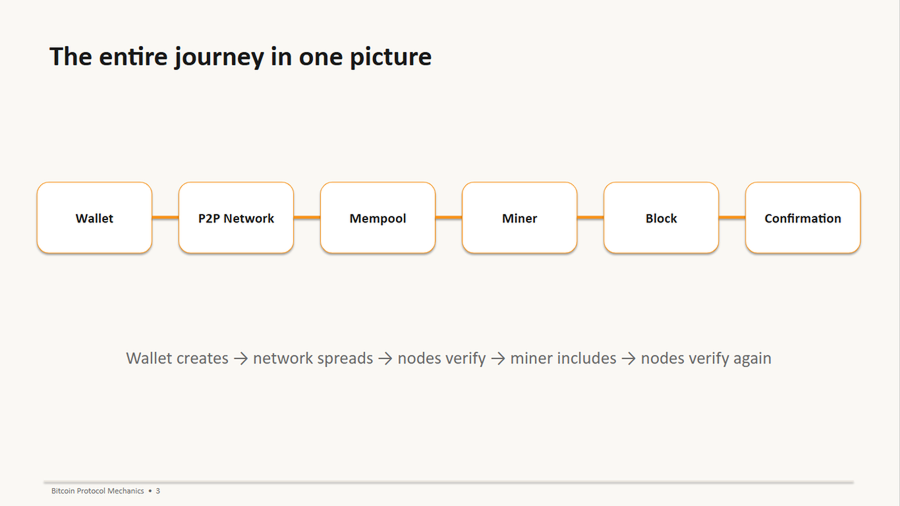
The group then mapped the path:

  • Wallet creates and signs the transaction.
  • The peer-to-peer network spreads it.
  • Nodes check it and hold it in the mempool.
  • A miner includes it in a block.
  • Other nodes verify the block.
  • Confirmations accumulate.

One diagram summarized the chain as wallet → P2P network → mempool → miner → block → confirmation.

Screenshot from BitDevs Ibadan’s first virtual meetup showing a Bitcoin transaction lifecycle slide on Jitsi

Session 2: Fountain Codes and the Cost of Running a Full Node

Dùnsin Abísuwà led the second block. The topic was fountain codes as a possible answer to Bitcoin’s growing storage burden.

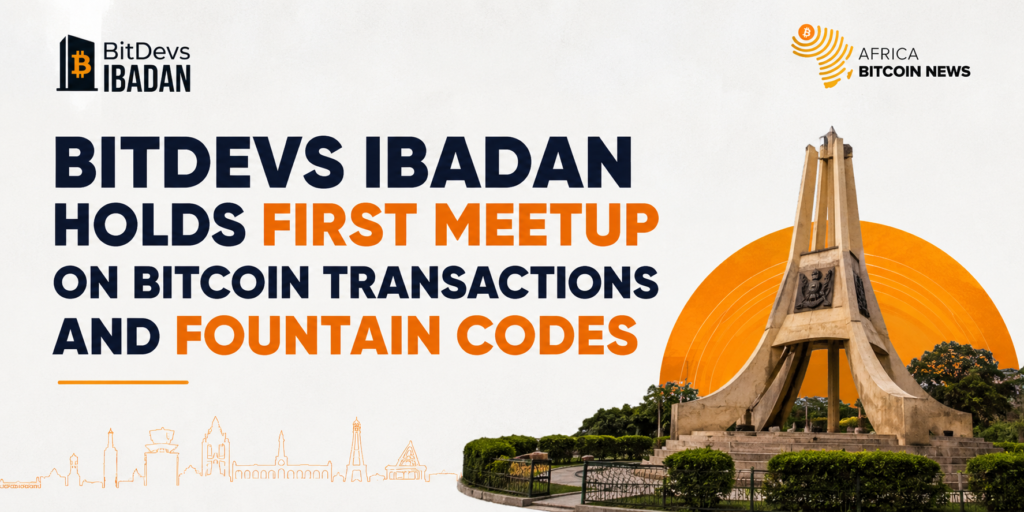
The slides put the problem in plain numbers. Every full node stores the entire chain. The presentation cited more than 750 GB today, with growth of about 6 to 7 GB each month. That cost makes it harder to run a node on cheap or mobile hardware. Fewer full nodes can weaken decentralization.

Pruned nodes save disk space, but they give up the ability to help new peers download history. That trade-off was the starting point for the research talk.

Fountain codes, especially Luby Transform (LT) codes, encode history into many small “droplets.” A node can store a thin slice instead of every old block. A new node collects enough droplets from peers, then reconstructs blocks and checks them against header Merkle roots.
Screenshot from BitDevs Ibadan’s first virtual meetup showing a Bitcoin transaction lifecycle slide on Jitsi

Session 3: How Developers Can Enter the Bitcoin Stack

The last segment turned from protocol internals to careers and code. Organizers listed concrete on-ramps:

Btrust Builders trains African software developers for Bitcoin and Lightning open-source work. Pathways include courses such as Mastering Bitcoin, Learn Bitcoin from the Command Line, Rust for Bitcoiners, language clubs, and a longer Bitcoin open-source software track.

The group closed by thanking attendees and asking people to follow @BitDevsIbadan
for Meetup #2.

Why an Ibadan BitDevs Chapter Matters?

Nigeria already has several BitDevs groups, including Lagos, Abuja, Kaduna, Kano, and Uyo. Ibadan is a large university city with an active retail digital assets scene, but protocol-level developer circles have been thinner than in Lagos or Abuja.

A local chapter gives Ibadan-based builders a regular place to study Bitcoin itself, not only price or trading.

The first agenda mixed fundamentals with research. That mix fits the BitDevs style: start from how the system works, then look at open problems such as IBD cost and node accessibility.

How to Follow the Next Session?

BitDevs Ibadan has not published the date for Meetup #2 in the recap thread. The account asked readers to follow @BitDevsIbadan for the next announcement.

Developers who want to prepare can start with the same resources shared on the call: the fountain-codes post, the awesome-bitcoin list, Btrust Pathways, and Summer of Bitcoin.

ENJOYED THIS ARTICLE?Support the authorSend a zap over Lightning or on-chain