
Beyond the Halving Cycle: What Grayscale’s Bitcoin Insight Means for Africa

For over a decade, Bitcoin investors have relied on a familiar rhythm: the four-year halving cycle. Every four years, Bitcoin’s block reward cuts in half, limiting the supply of newly minted coins. Historically, this supply shock triggered major bull markets, turning the halving into a focal point for the digital asset ecosystem.
However, that narrative is undergoing a fundamental shift.
In late July 2026, Grayscale Investments published a research note arguing that Bitcoin has entered a new phase of market maturity. According to Zach Pandl, Grayscale’s Head of Research, Bitcoin’s price is no longer governed strictly by supply issuance schedules. Instead, global liquidity, real interest rates, and U.S. Federal Reserve policy have become the primary drivers of performance.
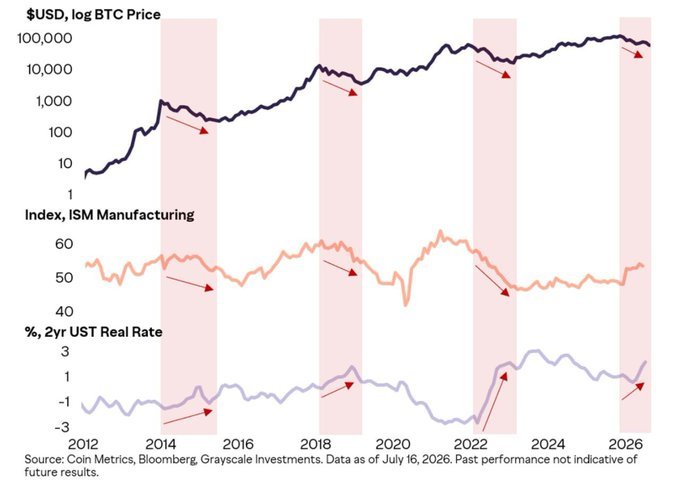
If Grayscale’s macro-driven model holds true, the implications stretch far beyond Wall Street. They directly impact millions of Africans who rely on Bitcoin not just for speculation, but as an essential financial utility.
Bitcoin as a Global Macroeconomic Asset
Grayscale’s findings underline a new reality: Bitcoin is behaving less like an isolated tech asset and more like a mature global macro instrument.
In previous market cycles, internal dynamics—such as miner economics, halving milestones, and retail sentiment—dictated price action. Today, deep institutional participation via spot Bitcoin ETFs and corporate treasury reserves has reshaped the landscape.
Institutional fund managers, hedge funds, and corporate treasuries now evaluate Bitcoin alongside legacy markets. Consequently, six key macroeconomic drivers now dictate price direction:
                  ┌──────────────────────────────────────────┐
                  │      FEDERAL RESERVE POLICY & RATES       │
                  └────────────────────┬─────────────────────┘
                                       │
            ┌──────────────────────────┼──────────────────────────┐
            ▼                          ▼                          ▼
  ┌───────────────────┐      ┌───────────────────┐      ┌───────────────────┐
  │  Global Liquidity │      │ Real Treasury     │      │ U.S. Dollar (DXY) │
  │  & Money Supply   │      │ Yield Dynamics    │      │ Strength Index    │
  └───────────────────┘      └───────────────────┘      └───────────────────┘
U.S. Federal Reserve Decisions: Interest rate policy directly affects risk appetite and borrowing costs worldwide.
Global Liquidity: Injections or contractions of central bank capital shift investor appetite toward or away from digital assets.
Real Interest Rates: Adjusted for inflation, rising real yields create headwinds for non-yielding assets like Bitcoin.
Inflation Expectations: Shifts in consumer price indexes (CPI) drive demand for inflation-hedging instruments.
Economic Growth Forecasts: Recessions or soft-landing projections alter capital preservation strategies.
U.S. Dollar Strength (DXY): A surging dollar often exerts downward pressure on dollar-denominated risk assets.
Grayscale highlighted that Bitcoin’s recent consolidation coincided with tight Federal Reserve monetary policy and elevated real yields. Pandl noted that if the Fed pauses rate hikes while economic growth remains resilient, Bitcoin may have already found its cycle floor.
Why Macro Sensitivity Matters More in Africa
While Western markets treat Bitcoin primarily as a portfolio diversifier, African adoption is driven by utility.
Across Nigeria, Kenya, Ghana, South Africa, and Uganda, millions of people rely on Bitcoin to solve structural financial obstacles.
| AFRICAN BITCOIN USE CASES | |
|---|---|
| 🛡️ Inflation Hedge | Preserving wealth against local devaluations |
| 💸 Remittances | Cutting cost on cross-border payments |
| 🌐 Global Trade | Bypassing local currency exchange shortages |
| ⚡ Lightning Rail | Off-ramping instantly into Mobile Money |
Because adoption centers on everyday utility rather than asset speculation, shifts in Bitcoin’s market behavior carry real-world consequences for freelancers, small business owners, diaspora families, and local entrepreneurs.
Rethinking the "Halving-Only" Playbook
For years, retail investors relied on a standard four-year trading cycle:
Grayscale’s research suggests that relying solely on this calendar pattern may prove risky. If central bank policies, liquidity cycles, and rate decisions dominate price action, tracking the Fed’s Federal Open Market Committee (FOMC) schedule becomes as important as monitoring Bitcoin’s block height.
Key Takeaway: The supply cap of 21 million BTC remains a crucial fundamental factor, but supply scarcity alone no longer dictates short-term price discovery.
What African Investors and Builders Should Track
To navigate a macro-sensitive environment, African market participants should focus on four core indicators:
Fed Rate Adjustments: Rate cuts typically boost global liquidity, benefiting risk assets like Bitcoin. Conversely, rate hikes or prolonged “higher-for-longer” stances tend to suppress valuations.
Real Yield Movements: When real yields on U.S. Treasuries fall, non-yielding assets become more attractive to global capital.
Global M2 Money Supply: Expanding money supply from major central banks frequently correlates with crypto market expansions.
Foreign Exchange Volatility: A strong U.S. dollar puts pressure on emerging market fiat currencies (e.g., NGN, KES, GHS), increasing local demand for Bitcoin even during global consolidation phases.
Opportunities for the African Bitcoin Ecosystem
Though macro sensitivity introduces external risks, it also signals Bitcoin’s integration into global finance, creating key opportunities across Africa:
Infrastructure Upgrades: As institutional involvement grows, enterprise-grade custodians, payment gateways, and Lightning Network routing nodes are scaling across African tech hubs.
Increased Venture Capital: Growing market maturity attracts global venture funds to back African startups building fiat-to-BTC rails, merchant software, and remittance networks.
Broader Economic Literacy: Financial education across the continent is expanding beyond wallet setup to cover broader monetary policy, trade dynamics, and global liquidity trends.
Key Takeaways for the Road Ahead
Macro Literacy is Mandatory: Understanding inflation, Fed policy, and exchange rates is now vital for managing Bitcoin risk.
Utility Shields Against Volatility: Platforms that integrate Bitcoin directly with local infrastructure, such as mobile money networks, remain resilient regardless of global market trends.
Proactive Risk Management: Households and business owners should balance their holdings, manage leverage, and account for currency fluctuations.
Regulatory Clarity Drives Advantage: African nations that establish clear, innovation-friendly crypto frameworks will lead in attracting foreign direct investment and fintech talent.
Grayscale’s analysis does not mean the halving is obsolete. Bitcoin’s fixed issuance schedule remains its core monetary foundation. However, as the asset matures, macroeconomic forces are playing a larger role in its day-to-day valuation.
For Africa’s growing ecosystem of users and builders, adapting to this macro-driven era is the next step forward.