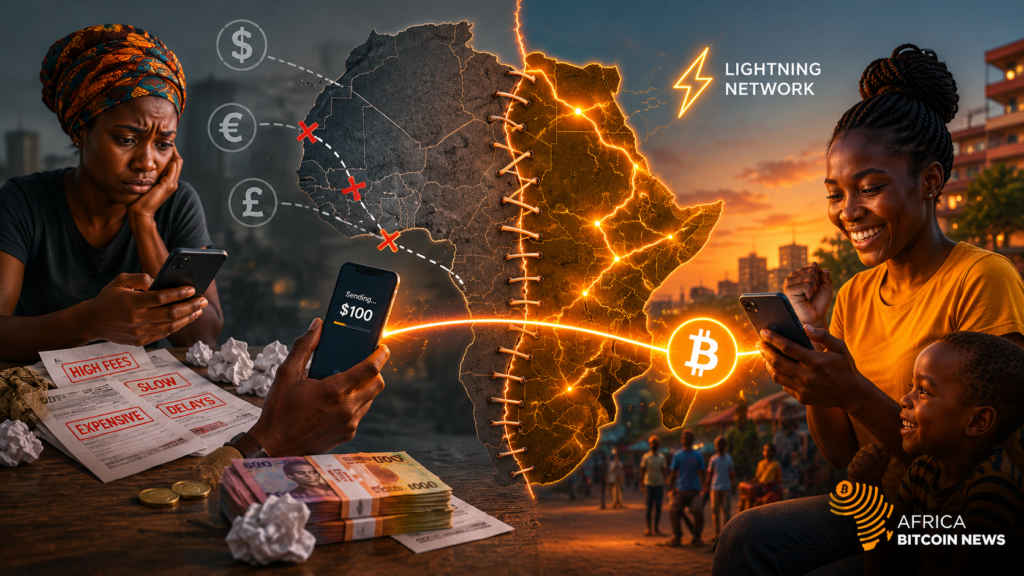
Africa’s Cross-Border Remittance Problem Has Two Wounds — And Bitcoin’s Lightning Network Is the Stitch

PAYMENTS ADOPTION

Every year, African families pay almost nine billion dollars in fees just to send money to each other. In 2024, roughly $104 billion flowed into Africa in remittances, almost twice what the continent received in overseas development assistance that same year. The average cost of sending $200 to sub-Saharan Africa sits close to 9 percent, the highest remittance rate anywhere on the planet.

That is the external wound. The internal one is worse.

Sending Money Within Africa Is Even More Expensive

The cost of remittances within Africa, intra-regional transfers between African countries, is even higher than transfers arriving from the United States or Europe. World Bank pricing data shows the Tanzania-to-Uganda corridor charges an average of 33 percent on a $500 transfer. That is $167 lost before a single shilling reaches the recipient.

The core problem is infrastructure fragmentation. Most intra-African transfers are still forced to convert into US dollars first, then convert again into the destination currency, a double conversion that inflates costs and delays settlement. The African Currency Marketplace launched in 2025 to address direct currency pairing, but the underlying correspondent banking system remains slow, opaque, and extractive.

Now Add a New Tax From Outside

A new US federal excise tax effective January 1, 2026 adds a levy on cash-funded international transfers, on top of fees already averaging 7.4% to Africa. Analysis by The Continent shows that in at least eight African countries, combined costs will now push to 9% or higher for small senders using cash at retail locations.

Two wounds, compounding each other. One from within. One from without.

Bitcoin's Lightning Network Is the Alternative Rail

Bitcoin has cracked this model, and the African diaspora is noticing. What it has done is break the monopoly on what is possible. For the first time in the modern history of African migration, the family sending and the family receiving have a choice.

That choice is already being built. In Tanzania, ChapSmart bridges the Lightning Network directly to M-Pesa, allowing Tanzanians to send cross-border payments affordably without losing a third of their transfer to intermediaries. In West Africa, Banxaas allows instant exchange between the CFA franc and Bitcoin without requiring a centralised exchange account. In Kenya, Tando turns any M-Pesa number into a Lightning address, no new wallet, no friction, no middleman taking 9 percent.

Every naira, cedi, shilling, or rand that bypasses the traditional counter and arrives through a Lightning wallet is a small vote for a different monetary future, one where Africa’s nine billion dollar annual fee burden starts shrinking.

ENJOYED THIS ARTICLE?Support the authorSend a zap over Lightning or on-chain