African Bitcoiners Q2 2026 Update: 177 Projects Across 23 Countries, Mauritius Joins, and 10 New Builders Emerge

ECOSYSTEM ADOPTION AFRICAN BITCOINERS

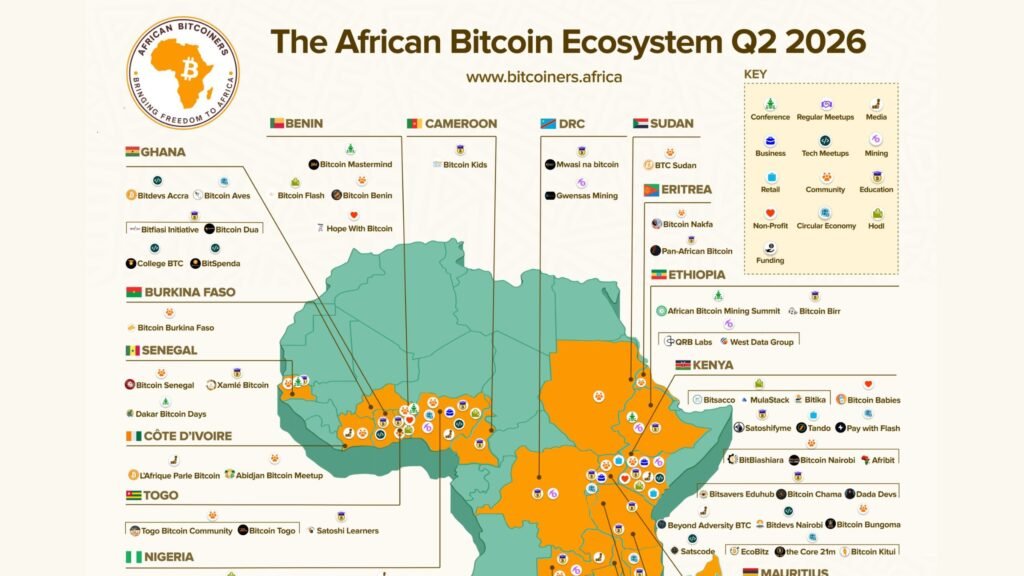
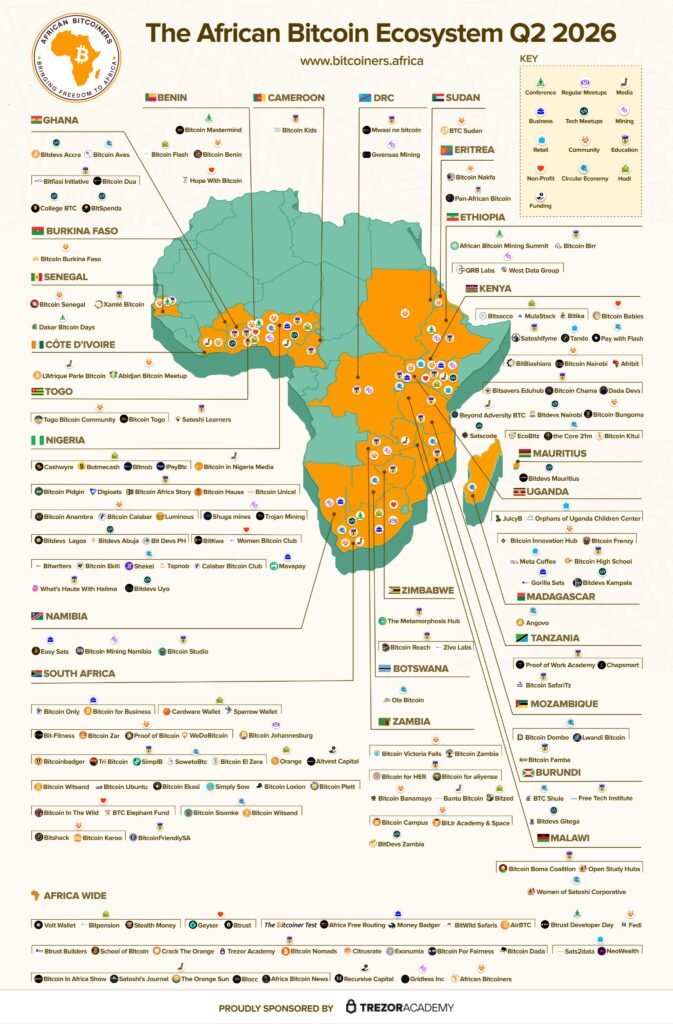
In a powerful testament to Bitcoin’s grassroots momentum across the continent, African Bitcoiners has released the Q2 2026 update to its African Bitcoin Ecosystem Infographic. The new figures show 177 documented Bitcoin projects spanning 23 African countries, with Mauritius making its debut on the map.

During Q1 2026, 10 new projects were added, representing approximately 6% quarter-over-quarter growth in visible Bitcoin activity. The announcement, shared on April 7, 2026, also highlights the successful launch of a Live Directory in Q1 2026 — a dynamic, community-managed platform that replaces the old static infographic with real-time, editable listings.

The Updated Infographic at a Glance

The high-resolution map uses a clean color-coded design (green and orange regions) with intuitive icons to showcase the diversity of Bitcoin initiatives. A detailed legend explains categories including:

  • Conferences & Regular Meetups
  • Business & Retail
  • Tech Meetups & Media
  • Mining
  • Education
  • Community & Non-Profits
  • Circular Economy
  • Humanitarian Aid & Funding

The infographic now features an expanded “Africa Wide” section at the bottom, listing continent-spanning projects, alongside dedicated country panels with project pins and names.

Live Directory: https://directory.bitcoiners.africa/ 

Key Highlights from the Update

  • Mauritius is newly added, signaling growing interest in island nations and Bitcoin-friendly jurisdictions.
  • Nigeria, Kenya, South Africa, Uganda, and Ghana remain the most active hubs, densely packed with projects.
  • The shift to a Live Directory allows project teams to log in, edit their own entries, and keep information accurate and up-to-date — a major step toward community ownership.
  • Trezor Academy continues as the proud sponsor, underscoring the focus on Bitcoin education.

New Projects Driving Momentum in Q2 2026

Here are the new projects:

  • @BitZed_ (Zambia): A user-friendly platform allowing people to spend Bitcoin directly to mobile money (Airtel, MTN, Zamtel) or buy BTC with mobile money. Built for everyday users, it lowers the barrier for real-world Bitcoin usage in Zambia.
  • @BTCHighSchool: An innovative Bitcoin education platform offering over 1,000 free, grade-school-level questions and lessons. It uses Lightning Network micropayments and makes Bitcoin accessible and fun for younger learners across the continent.
  • @RightOnTheTape (Malawi): Focused on decentralized Bitcoin education and study hubs. The project promotes practical, offline-friendly adoption strategies inspired by initiatives like My First Bitcoin and Machankura8333.
  • @LwandiBitcoin (Mozambique): Building a Bitcoin circular economy in the Ponta do Ouro beach community. It creates local loops where residents and businesses can earn, spend, and save in sats, supported by mentors like Bitcoin Famba. It has strong potential as a model similar to successful circular projects in South Africa.
  • @BitDevsMRU (Mauritius): The newly mapped BitDevs chapter in Mauritius. This technical developer community hosts regular meetups, workshops, and discussions on Bitcoin and Lightning development. It strengthens the island nation’s role in the African Bitcoin ecosystem and supports open-source contributions.
  • @afribitcoiners: The core community and curators of the directory itself — continuously mapping and supporting the ecosystem.
  • @AfriBitcoinNews: A dedicated media outlet delivering news, updates, and stories from the African Bitcoin space to amplify builders and adoption efforts.
  • @BitDevsKLA (Uganda): The Kampala BitDevs chapter, a technical meetup series for developers and enthusiasts focused on Bitcoin protocol and development discussions.
  • @BitJracademy (Zambia): BitJR Academy & Space in Livingstone — a standout non-profit providing Bitcoin education for children aged 6–17. It builds a safe kids’ circular economy where young learners can earn, spend, and save sats while gaining practical money skills.
  • @panafricanbtc: The Pan-African Bitcoin Academy (with roots in Eritrea and activities across countries like Uganda). It offers structured Bitcoin education tailored to African realities, including developer resources and continent-wide learning programs.

These additions highlight key themes: youth and education (BTCHighSchool, BitJracademy), circular economies (LwandiBitcoin), technical communities (BitDevs chapters), and practical on-ramps (BitZed_). The inclusion of Mauritius via BitDevsMRU expands the map to 23 countries and shows Bitcoin’s reach extending to new geographies.

Spotlight: Selected Country Activity (Q2 2026)

The map reveals strong regional clusters:

West Africa — Nigeria dominates with dozens of projects (e.g., Bitnob, PayBTC, Cashyre, Trojan Mining, BitDevs Lagos, Bitcoin Anambra). Ghana, Senegal, Togo, Burkina Faso, Benin, and Côte d’Ivoire show solid education, meetup, and payment-focused activity.

East Africa — Kenya (Bitassa, MulaStack, Bitcoin Babies, Bitshala), Uganda (Juicy B, Bitcoin Innovation Hub, Gorilla Sats, BitDevs Kampala), Tanzania, and others feature strong circular economy and youth education initiatives.

Southern Africa — South Africa leads with Bitcoin Only, Sparrow Wallet, Proof of Bitcoin, WeDoBitcoin, and many circular businesses. Zimbabwe (Bitcoin Reach, Zivo Labs), Namibia, Zambia, and Botswana also appear.

Emerging & North/Central — Projects in DRC (Gwesmas Mining), Ethiopia, Cameroon, Sudan, and others highlight mining, education (Bitcoin Kids), and community work. Mauritius now joins with BitDevs Mauritius.

Africa-Wide — Volt Wallet, Bitpension, School of Bitcoin, Gridless Inc., Trezor Academy, and many more.
Why This Matters

In regions challenged by inflation, remittance costs, limited banking access, and capital controls, these projects are building practical solutions: Bitcoin-powered payments, savings tools, mining operations, humanitarian aid in sats, and education programs that empower the next generation.

The move to a self-service Live Directory reflects a maturing ecosystem — no longer just mapping what exists, but enabling builders to directly shape the narrative.