
The African Bitcoin Circular Economy Summit 2026!
How Circular Economies are Pioneering Sustainable Financial Ecosystems
Circular economies in Bitcoin refer to self-sustaining systems where Bitcoin is used for everyday transactions, remittances, and value storage within communities, reducing reliance on traditional financial institutions.
In Africa, where over 60% of the population is unbanked, these models are particularly relevant. They address challenges like high remittance fees, currency volatility, and limited access to credit by enabling peer-to-peer payments and micro-economies.
For instance, projects in regions like South Africa, Ghana, Zambia, Kenya and Nigeria have demonstrated how Bitcoin circular economies can empower small businesses, support renewable energy initiatives, and promote financial inclusion.
Some of the ways Circular Economies are Pioneering Sustainable Ecosystems in Africa
Over the years, the African Bitcoin ecosystem has witnessed some of the most remarkable circular economic initiatives and while these projects are spreading like wildfire, there is a pending question of it’s actual relevance to the African Bitcoin economic sector. Circular economies across Africa facilitate:
- Empowerment of Small Businesses and Communities: Projects promote merchant adoption, allowing small vendors to accept Bitcoin for goods and services, which circulates value locally. This reduces leakage to external financial systems and supports grassroots entrepreneurship, such as in townships or rural areas where Bitcoin is earned and spent without fiat conversion.
- Integration with Renewable Energy and Sustainability: Some initiatives link Bitcoin to eco-friendly practices, like solar-powered mining or energy projects, addressing Africa’s energy access gaps while creating circular flows where Bitcoin funds renewable infrastructure.
- Educational and Adoption Focus: Many projects emphasize Bitcoin education, workshops, and tools for non-internet users (e.g., SMS-based wallets), accelerating adoption in regions with limited digital infrastructure. This builds long-term financial literacy and scales circular models across communities.
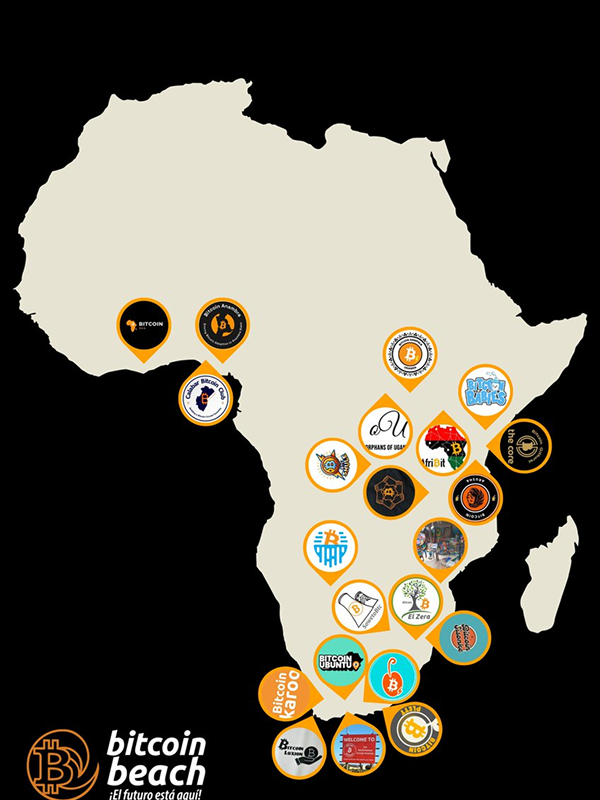
- Growth and Scale: Africa leads globally in Bitcoin circular economy projects, with over 160 initiatives tracked as of 2025, showing 18% annual growth as shown in the African Bitcoiners Infographic directory 2026. These span mining, Lightning Network tools, and merchant networks, demonstrating rapid grassroots expansion.
References to Real Projects Across Africa
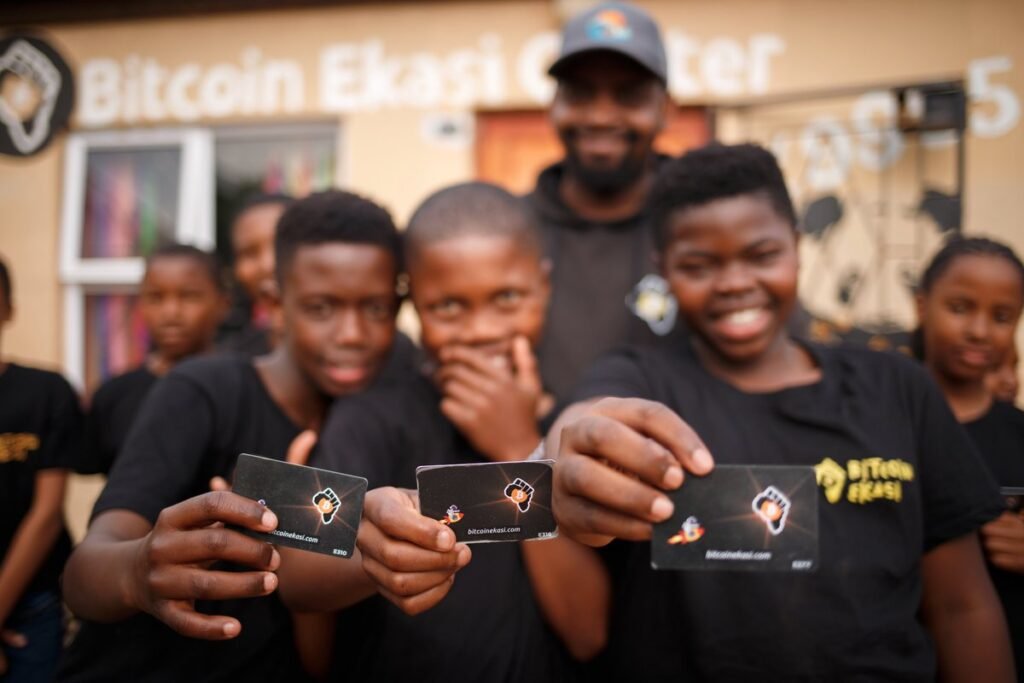
South Africa: Bitcoin Ekasi (Mossel Bay township) builds circular economies through education and merchant adoption, enabling locals to earn and spend Bitcoin via sports and community programs; supported by Bitcoin Beach grants since 2021. Other projects include Bitcoin Ubuntu, Bitcoin Witsand (rural focus with farming), Bitcoin Loxion (Khayelitsha), Bitcoin Karoo, Soweto BTC, Bitcoin Plett, Sisonke BTC, and Proof of Bitcoin (Pretoria, with business directories and events). Machankura allows SMS-based Bitcoin transactions for unbanked users.
Ghana: Bitcoin Dua focuses on community-driven circular economies, emphasizing everyday Bitcoin use for transactions and remittances.
Zambia: Bitcoin Victoria Falls (Livingstone) promotes education, merchant adoption, and financial empowerment in a circular model.
Kenya: Bitcoin Chama creates sustainable rural economies using Bitcoin for beekeeping, poultry, and farming products. Other initiatives include, Afribit Kibera, Bitcoin Nairobi, and Bitcoin Chama.
Nigeria: Bitcoin Anambra, Bitcoin Calabar, and Bitcoin Ekiti build local circular economies with youth education and business adoption.
The African Bitcoin Circular Economy Summit 2026
Africa’s Bitcoin adoption grows everyday with countries like South Africa and Nigeria leading in peer-to-peer trading these summits provide the blueprint for scaling impact, ensuring that Bitcoin serves as a tool for economic empowerment rather than speculation.
The African Bitcoin Circular Economy Summit 2026 is pivotal in fostering innovation and collaboration. This year the event is scheduled for January 29, 2026, at Workshop 17 in the V&A Waterfront, Cape Town, South Africa. This summit will bring together pioneers from across the continent to deliver presentations and workshops aimed at strengthening existing initiatives and inspiring new circular economy projects.
The summit was organized as part of the broader Adopting Bitcoin Cape Town conference, and the event emphasizes grassroots adoption and real-world applications of Bitcoin in local economies. Different activities will take place and participants should expect a mix of talks, interactive workshops, and networking opportunities, with livestreaming available for global participation.
This Africa-focused edition follows the global Bitcoin Circular Economies Summit in El Salvador, highlighting the continent’s unique role in the movement.
Watch the video below for more: