Why Francophone Africa Needs Its Own Bitcoin Events: Lessons from Ouagadougou
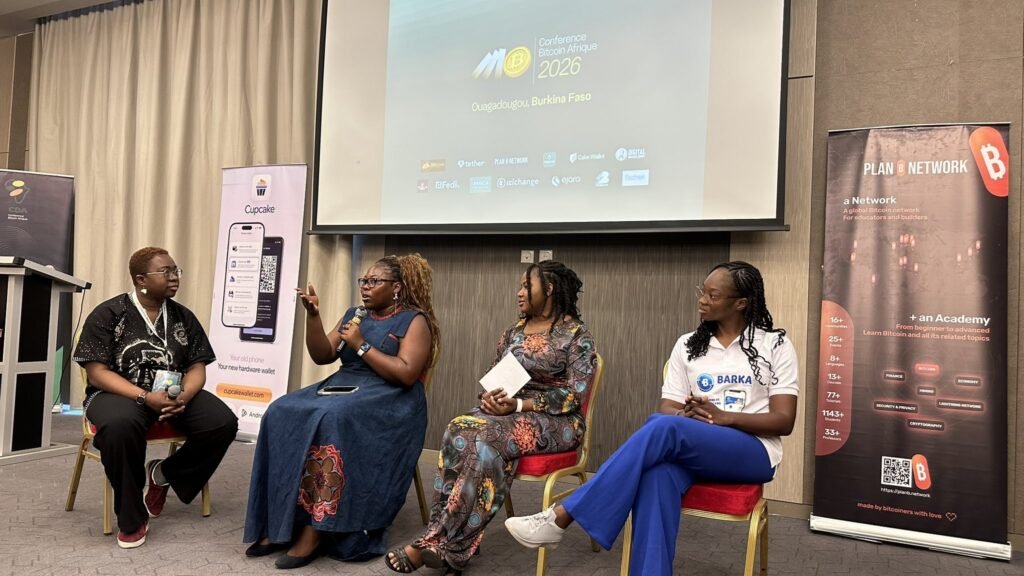
From April 17 to 19, I spent three days at the Azalaï Hotel in Ouagadougou for the Conférence Bitcoin Afrique. I went in thinking I was attending another Bitcoin conference. I left convinced that Francophone Africa doesn’t just benefit from having its own events — it needs them. Not as a nice-to-have, not as a translation of what’s already happening in English, but as its own thing, built from the ground up in the language people actually live and work in.
Here’s why.
The Participation Gap Nobody Talks About
For years I’ve watched Bitcoin conversations happen almost exclusively in English. I’ve sat in rooms where brilliant builders from Francophone countries stayed quiet, not because they had nothing to say, but because the conversation simply wasn’t theirs to join. You can translate a talk. You can’t translate a community. The side conversations, the jokes, the fast back-and-forth that makes networking actually work, those don’t survive interpretation.
Standing in that conference hall in Ouaga, watching panels flow in French and audiences lean in instead of squint at translations, I realized how much of the continent we’ve been leaving out of the Bitcoin conversation by default. Hosting everything in English doesn’t just create a language barrier, it creates a participation barrier. And Francophone Africa has been on the wrong side of it for too long.
This event felt like a correction.
A Bitcoin-only Room, in French
It was Bitcoin-only by design, and French-first by necessity. Over three days, builders, educators, entrepreneurs, community organizers, policymakers, and curious newcomers filled the space. Some sessions ran in English, but the center of gravity was unmistakably Francophone, the first time I’ve personally been at a conference of this scale where that was true.
The themes were practical, not speculative: financial inclusion and remittances, hedging against local currency volatility, building circular Bitcoin economies, and what responsible innovation looks like in a region that can’t afford to get it wrong. Nobody was there to pump anything. The conversations kept returning to sound money, to saving, to what it means to hold value in a region where inflation and limited banking access are daily realities, not abstractions.
One speaker asked a question that silenced the room: “If saving your money guaranteed it would be worth less in 10 years, would you save?” In a Sahel context, that question lands differently than it does in a San Francisco meetup. People nodded. Some laughed the kind of laugh you laugh when something hits close.
The Bootcamp Running Alongside
One of the most important things about that week wasn’t even on the main conference agenda: Africa Free Routing hosted a Lightning bootcamp in partnership with the conference, running alongside the main sessions. This mattered more than it might sound.
Conferences are good for awareness. Bootcamps are good for builders. Running them together meant that while keynote audiences were getting inspired, a parallel room of developers was actually getting their hands dirty — writing code, breaking things, shipping something small. By the time the conference wrapped, you had people who weren’t just more informed about Bitcoin and Lightning; you had people who could build on it. In French. With instructors and peers who spoke their technical language, literally and figuratively.
This is the model. You can’t educate a region into a circular economy with keynotes alone. You need the hands-on layer underneath. And Africa Free Routing’s partnership with the conference showed what that looks like when it’s done intentionally.
Policymakers in the Room
What surprised me most was the institutional engagement. Organizers held strategic meetings with Burkina Faso’s Ministry of Digital Transition, Posts, and Electronic Communications, covering digital innovation, Bitcoin’s role in emerging economies, and what responsible adoption looks like at the policy level. That kind of dialogue doesn’t happen at every conference, and the fact that it happened here, in Ouaga, in French, matters. Policymakers engage more readily when the conversation is in their own language and rooted in their own context. Another argument for why Francophone events can’t just be afterthoughts to English-speaking ones.
The Sankara Memorial, Day Three
On the third day, a group of us visited the Thomas Sankara memorial.
I wasn’t prepared for how heavy it would feel.
Sankara led Burkina Faso for just four years before he was assassinated in 1987, at 37 years old. In that short time he renamed the country from Upper Volta to Burkina Faso, “Land of Upright People”, refused foreign debt on principle, prioritized food self-sufficiency, and built a vision of African sovereignty that terrified far more powerful people than him. Standing at the memorial where he and twelve of his comrades were killed, listening to the story told on the ground where it happened, something clicked about why we were really all in Ouagadougou that week.
Bitcoin, at its core, is about monetary sovereignty. About not having your store of value dictated by institutions that don’t answer to you. Sankara was killed, in part, for trying to claim exactly that kind of sovereignty for his country at the political level, refusing debt traps, rejecting IMF conditions, insisting that Africa could feed and finance itself. Four decades later, a group of African builders and educators stood at his memorial, working on a technology that lets ordinary people do at the individual level what he fought for at the national level.
There was an on-chain OP_RETURN tribute to Sankara that week. After visiting the memorial, it stopped feeling like a cute gesture and started feeling like a thesis.
You can’t separate Bitcoin adoption in Francophone Africa from the political and economic history of Francophone Africa. And you can’t tell that story properly at a conference in London or Austin or Nairobi. You have to tell it here. In French. On the ground where it happened.
That’s another reason Francophone Africa needs its own events.
What Comes Next
The plan, as I understand it, is to rotate future editions across different Francophone countries, turning this into a continent-wide platform rather than a one-city affair. Based on the energy in Ouaga, I believe it. This also builds directly on earlier work like Bitcoin Mastermind in Benin and Dakar Bitcoin Days in Senegal, there’s a real throughline forming across the region.
Bitcoin adoption across Africa is already happening. Nigeria’s on-chain volumes are huge. South Africa and Kenya are making regulatory moves. Stablecoin rails quietly power remittances everywhere. But the educational and community infrastructure has been overwhelmingly English-speaking, which means Francophone builders, educators, and users have had to do twice the work: learn Bitcoin and learn it through a second language. Most people don’t have time for that. A French-first Bitcoin conference isn’t a niche event. It’s a structural fix.
Ouagadougou made the case. The question now is who continues it, where the next edition lands, and how many more bootcamps run alongside the next one.
If you’re building in this space and you haven’t been paying attention to Francophone Africa, now is the time.
The official site is afriquebitcoin.org.