Inside Africa Free Routing’s Bujumbura Lightning Developer Bootcamp
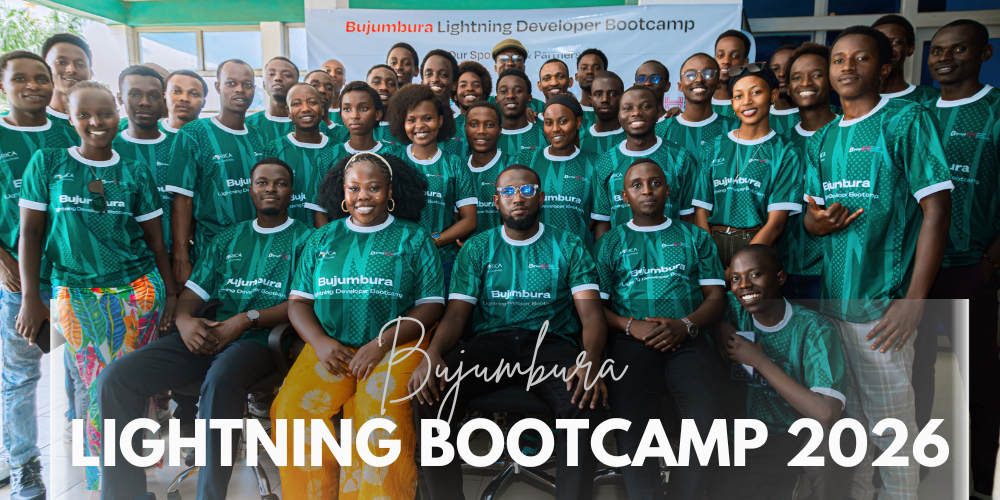
From May 25–29, 2026, Africa Free Routing, a project initiated by African Bitcoiners focused on scaling Layer-2 infrastructure across the continent, hosted an intensive five-day Lightning Developer Bootcamp in Bujumbura, Burundi.
Held at Skynet Burundi in the Kigobe neighborhood, the bootcamp brought together software developers, computer science students, and technology professionals eager to deepen their understanding of Bitcoin and the Lightning Network. The objective was clear: equip African developers with the skills needed to build, maintain, and contribute to Bitcoin’s open-source infrastructure while creating solutions tailored to local needs.
From Bitcoin Fundamentals to Lightning Applications
Over five days, participants progressed from understanding Bitcoin’s foundations to building practical Lightning-powered applications. The curriculum covered:
Bitcoin core architecture: Data structures, transactions, cryptographic signatures, and network consensus rules.
Lightning Network concepts: Payment channels, routing topologies, liquidity management, and Hash Time-Locked Contracts ($HTLCs$).
Node management: Running, configuring, and monitoring live Bitcoin and Lightning nodes.
Application integration: Building Lightning-enabled applications, wallets, and point-of-sale services.
Open-source ecosystem mechanics: Contribution workflows and developer best practices.
Participants spent much of the bootcamp in hands-on labs, working directly with development tools like Lightning Polar to simulate network environments and test node interactions. By the end of the program, teams had developed and demonstrated working prototypes, including micro-payment applications, merchant tools, and Lightning-powered services designed specifically for African markets.
Developing the Next Generation of African Bitcoin Builders
The training sessions were facilitated by experienced technical educators Olaniran Laurent and Advaxe NDAYISENGA, who guided participants through practical exercises, code reviews, and collaborative debugging sessions. Logistics and infrastructure coordination were handled behind the scenes by Satoshee and Lys.
The bootcamp was further strengthened through support from regional ecosystem partners and community leaders, including BitDevs Great Lakes Region, Barakana, and Belyi Nobel, who helped connect the technical content to real-world deployment opportunities within Burundi and the wider East African region. Beyond the classroom, the program fostered new relationships among developers, creating a growing network of builders who can continue learning, collaborating, and contributing long after the bootcamp concludes.
Supported by Global and African Bitcoin Organizations
The Bujumbura bootcamp was made possible through the support of global and regional non-profit organizations committed to advancing technical education and open-source development. Vital support was provided by:
Btrust: Funding open-source developer training and development across the Global South.
Human Rights Foundation (HRF): Supporting financial freedom technology initiatives through its targeted grants.
Tether Africa: Allocating development resources to expand regional payment infrastructure and access.
Plan ₿ Network: Providing comprehensive multi-language educational material and protocol learning pipelines.
Free Tech Institute: Assisting with technical logistics and local training infrastructure.
Their contributions helped ensure the program remained entirely free for participants while providing access to physical hardware tools, high-speed internet, and long-term mentorship.
Strengthening Africa's Lightning Network
The Bujumbura bootcamp forms part of Africa Free Routing’s broader mission to strengthen Bitcoin and Lightning infrastructure across Africa. By training developers, supporting open-source contributions, and helping builders create practical applications, the initiative is working to ensure that African technical communities are active contributors to global monetary infrastructure rather than passive consumers of legacy financial technology.
As the team prepares for its upcoming bootcamps in Kisumu, Kenya, and Ethiopia, the goal remains unchanged: grow the number of African developers capable of building the tools, infrastructure, and businesses that will power decentralized networks across the continent.