After the Photos: Will the Merchants Still Accept Sats?

OPINIONS COMMUNITY ECOSYSTEM

You have seen the pictures.

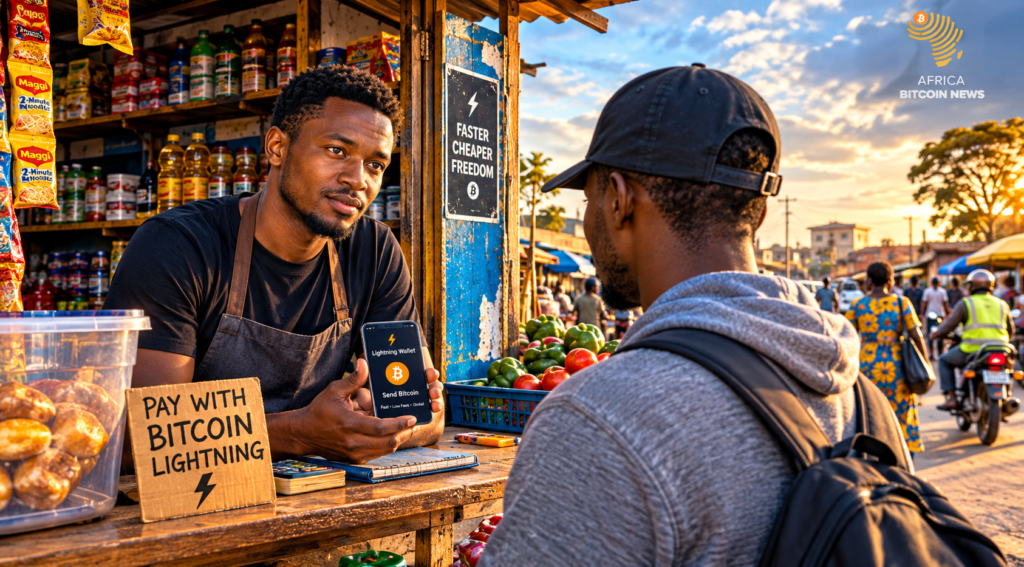
A shopkeeper smiling while holding a phone.
A handwritten “Bitcoin Accepted Here” sign.
A short video of sats moving across a counter.
A group photo outside a small stall that now accepts Lightning.

These moments feel like progress.
And in many ways, they are.

Across Kenya, South Africa, Uganda, and other parts of the continent, Bitcoin circular economies have grown. Projects have onboarded merchants, recorded real payments, and shown that people can earn and spend sats in their own communities. The work is real. The effort is serious.

But there is a quieter question that does not appear in the photos:

What happens three months later — when the visitors have left, the campaign has ended, and no one is filming?

The Numbers We Like to Share.

In recent years, networks of circular economy projects have begun tracking verified Bitcoin payments at African shops. Filmed and approved transactions have reached into the thousands. New grants continue to support small businesses so they can stock goods and keep accepting sats. Community leaders meet, exchange lessons, and celebrate each new merchant who says yes.

These stories matter. They prove that Bitcoin can move beyond speculation and into everyday life. They give people hope.

Yet many of the same builders who create these moments also speak honestly about the difficulty. The work is slow. Progress is uneven. Keeping a merchant active is often harder than getting them to accept Bitcoin the first time.

Why Merchants Quietly Step Back.

A shopkeeper does not live inside a conference or a Telegram group.

They live in the daily pressure of restocking, paying suppliers, covering rent, and serving customers who mostly still use cash or mobile money. When Bitcoin’s price moves sharply, the value of the sats they received can change before they convert them. Local demand for spending sats is often still thin. Liquidity can be uneven. The simplest path is frequently the one they already know.

Accepting Bitcoin during a visit or a campaign is one decision.
Preferring it weeks later, when no one from the community is watching, is a completely different decision.

This gap between onboarding and retention is one of the least discussed challenges in Africa’s Bitcoin ecosystem.

The Question the Photos Cannot Answer.

We have become very good at capturing the beginning of the story.
We are less consistent at measuring the middle and the long end of it.

How many of the merchants who accepted sats last year are still actively accepting them today?
How many continue to prefer Bitcoin even when it is slightly less convenient?
How much of the local economy is actually circulating sats between ordinary people — without external encouragement?

These are not cynical questions.
They are necessary ones.

Real circular economies are not built on stickers or single transactions. They are built on repeated, voluntary use. On merchants who keep the option open because it serves them, not because someone is visiting. On customers who return with sats because it has become normal.

Why This Matters Before Blantyre.

In a few weeks, many of us will gather again — this time in Blantyre for the Africa Bitcoin Conference. There will be powerful stories, new projects, and fresh energy around circular economies and grassroots adoption.

That energy is valuable.

But the more important conversation may be the quieter one: how do we move from inspiring launches to systems that can breathe on their own? How do we support merchants not only at the moment of onboarding, but through the long months that follow? How do we measure success by sustained local velocity rather than by the number of new stickers?

The conference can celebrate what has been built.
It can also create space for the harder questions about what still needs to hold.

A Mirror for All of Us.

If you have ever helped onboard a merchant, this question is for you.
If you have shared a success photo, this question is for you.
If you are preparing to speak about adoption in Blantyre, this question is for you.

Are we building circular economies that can survive the absence of our attention?

The answer will not be found only in the next grant or the next campaign.
It will be found in the quiet decisions of shopkeepers and customers long after the cameras are gone.

The Invitation.

Before you share the next photo of a new Bitcoin merchant, pause for a moment.

Ask yourself what would need to be true for that merchant to still be accepting sats six months from now — without any of us watching.

Then ask what you are willing to build, support, or measure differently so that the answer becomes more often “yes.”

The photos will keep coming.
The real test is what remains when the photos stop.

See you in Blantyre.
Come ready to talk about what lasts.

Subscribe For Weekly Updates! →

Get the Weekly Brief

Essential African Bitcoin news, curated for builders. No spam.

"*" indicates required fields

Name*
Email*
ENJOYED THIS ARTICLE?Support the authorSend a zap over Lightning or on-chain