How Bitcoin Can Fix Loss of Access to Cross-Border Payments by Kenyan Freelancers and Businesses.

OPINIONS BUSINESS LIGHTNING NETWORK

For many Kenyans, the question is no longer theoretical. It is practical and urgent: how do you keep earning when the platforms that once worked suddenly stop?

One by One. The Payment Rails are Closing.

In the past year, PayPal tightened restrictions on many Kenyan accounts. Hurupay ended its US-dollar banking service. Sendwave paused its digital dollar wallet and told users to withdraw funds. Twitch ended creator monetisation for some.

These are not isolated glitches. They are part of a wider pattern: the rails that Kenyan freelancers, remote workers, digital creators and small businesses use to receive money from outside the country keep disappearing or becoming more expensive and unreliable.

Seamless cross-border payments remain one of the biggest barriers to regional and international trade.

”Businesses should incorporate digitization to widen access to e-commerce.” ~Ruhi Suttarwala, CEO Emmerce Limited

The Real Cost of Broken Rails.

Kenya receives billions of dollars in remittances and service exports every year. Freelancers, software developers, designers, writers and small exporters depend on those inflows. 

When a platform freezes accounts, pauses wallets or adds new compliance hurdles, the impact is immediate: delayed school fees, unpaid rent, stalled business orders and lost trust with foreign clients.


Traditional correspondent banking is slow and expensive. Mobile money works brilliantly inside Kenya but does not solve the last mile for international payments. The result is a constant search for the next workaround until that workaround also changes the rules.

This is the pain point Bitcoin was designed to address: value that moves without permission from any single company or banking partner.
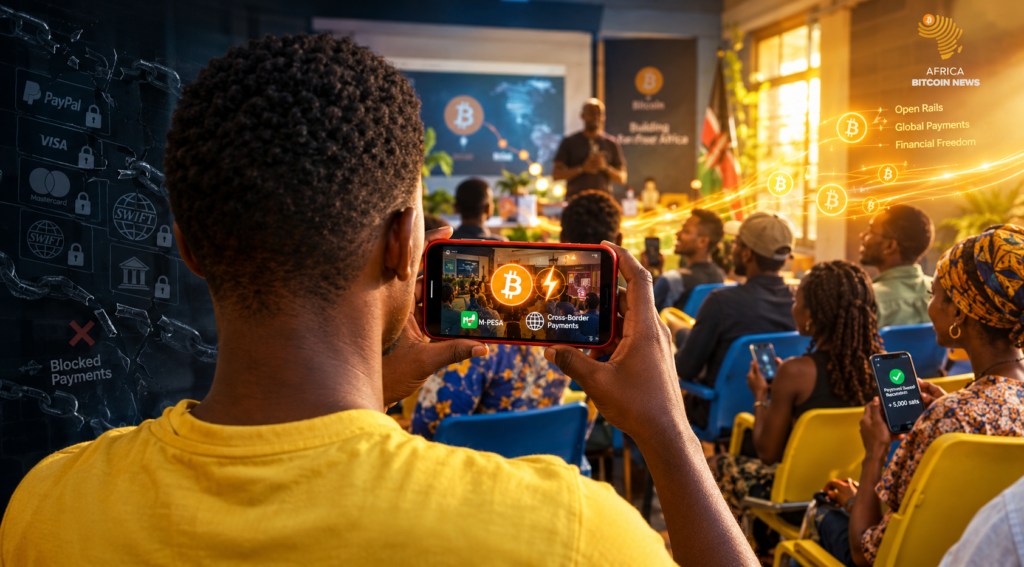

Bitcoin and Lightning Are Already Providing an Alternative.

Tools built in Kenya are turning that principle into something usable today.

Tando allows anyone with a Lightning wallet to send Bitcoin to a Kenyan M-pesa phone number. The recipient receives Kenyan shillings in their M-Pesa account no wallet, no seed phrase, and no extra fees beyond standard M-Pesa charges during the adoption phase. The service effectively turns millions of M-Pesa numbers into Lightning addresses. You can explore it at tando.me.

This is not a theoretical future. It is a working bridge that connects global Bitcoin liquidity to Kenya’s existing mobile-money rail. For a freelancer in Nairobi receiving payment from a client in Europe or the United States, the difference is significant: near-instant settlement, dramatically lower fees, and no dependence on a single foreign platform that can change its terms overnight.

The Knowledge and Trust Gap Still Holds People Back.

The technology exists. The bigger barriers are knowledge and trust.

Many Kenyans who could benefit most from Lightning rails have never used them. Volatility fears, past experiences with scams and the simple fact that most people just want “money in M-Pesa” meaning that even when a better option is available, conversion to shillings happens immediately. The circular economy — earning, saving, and spending in Bitcoin remains limited.

Education and simple, reliable on-ramps and off-ramps matter as much as the protocol itself. Projects that hide the complexity (phone-number Lightning addresses, instant M-Pesa settlement, clear fee structures) lower the barrier. Projects that require users to become experts raise it.

Call To Action.

Three things would accelerate real progress:

  1. More visible success stories — Freelancers and businesses openly sharing how they now receive payments via Lightning without the old platform risks.
  2. Clearer regulatory pathways for low-risk payment tools so that legitimate bridges can operate with confidence instead of uncertainty.
  3. Continued building of the last mile — Tools that make receiving and spending Bitcoin as ordinary as sending M-Pesa.

Bitcoin does not solve every problem. It does solve the specific problem of depending on platforms that can lock you out. In a year when several of those platforms have done exactly that, the case for permissionless rails has never been clearer.

Kenyan builders have already shown that M-Pesa can be connected to Lightning. The next step is making sure enough people know it exists, trust it, and use it before the next foreign platform changes its rules again.

The rails keep closing. Bitcoin keeps the door open.

Subscribe for Weekly Updates!

Get the Weekly Brief

Essential African Bitcoin news, curated for builders. No spam.

"*" indicates required fields

Name*
Email*
ENJOYED THIS ARTICLE?Support the authorSend a zap over Lightning or on-chain