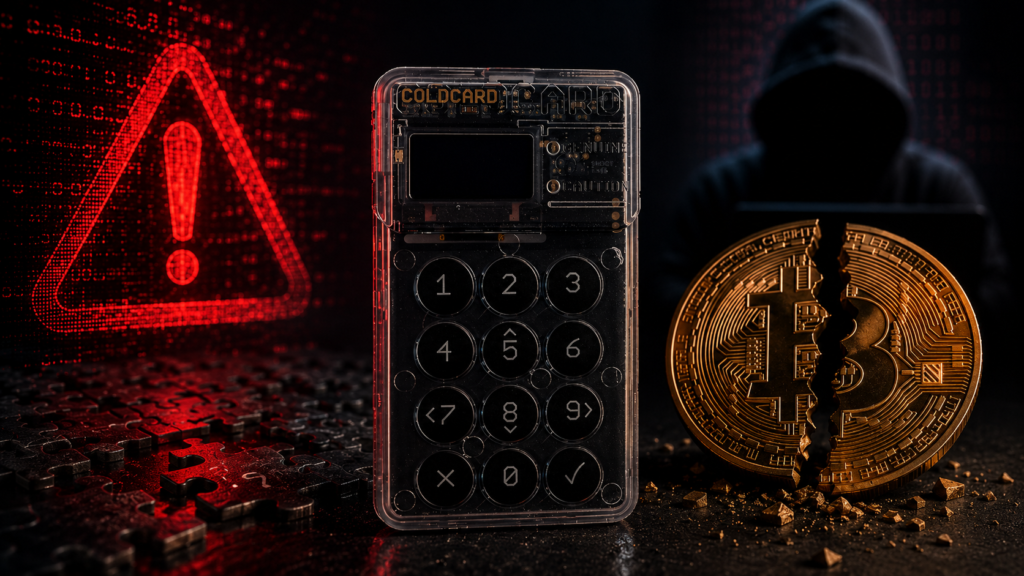
The researchers also examined newer Coldcard devices, including the Mk4, Q, and Mk5.
These devices introduced entropy from a secure element, which sounds reassuring at first glance. However, the analysis suggests that only 32 bits of that entropy were actually injected into the internal state of the random number generator during reseeding.
To understand why this matters, consider the scale involved.
A properly generated Bitcoin seed should have approximately 256 bits of entropy.
Thirty two bits represents just over four billion possibilities.
Four billion is still a large number, but it is many orders of magnitude smaller than the security level users expect when generating Bitcoin private keys.
The researchers argue that this limitation may have reduced the number of distinct random streams available during seed generation.