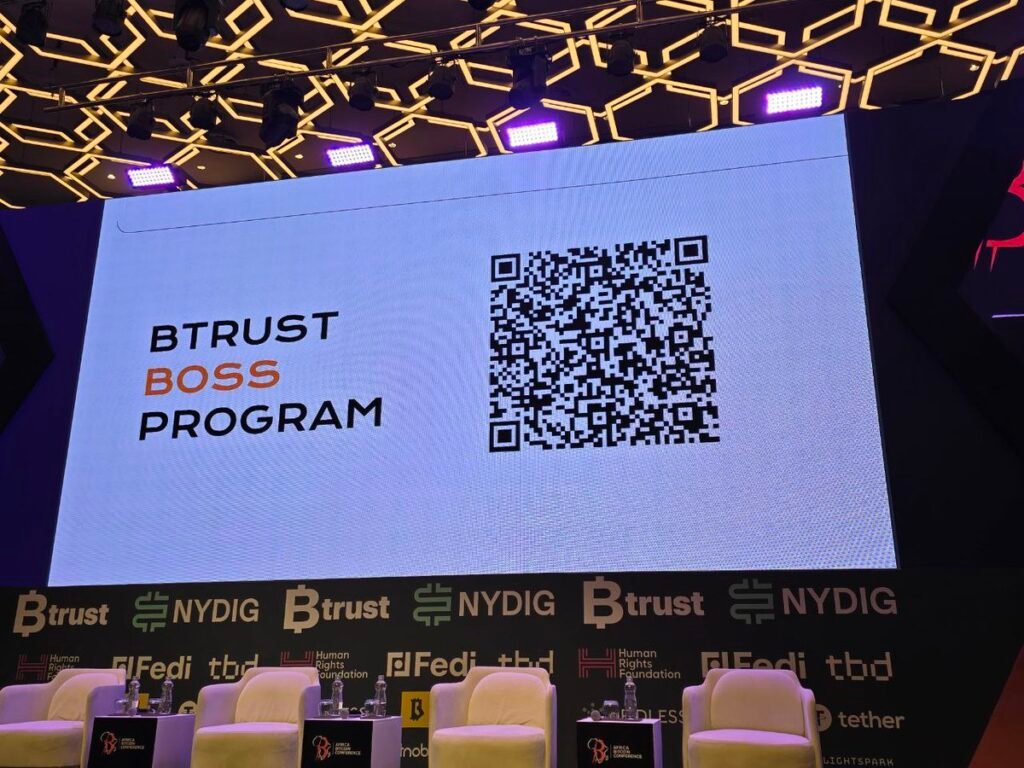
After a month of intense coding “sprints,” Btrust confirmed today that the top-performing African developers from the current cohort are being transitioned into Advanced Mentorship. This stage moves them away from exercises and directly onto “Proof-of-Concept” projects for Bitcoin Core, the Lightning Network, and the Bitcoin Dev Kit (BDK).
“We aren’t just teaching people how to code; we are teaching them how to become maintainers,” says a Btrust Builders faculty member. “By the time this cohort finishes in April, these developers won’t just be looking for jobs—they will be the ones reviewing the pull requests of the global community.”
One of the most significant updates discussed this week is the operational success of the Btrust Pull Partnership. Introduced to solve the chronic “Visa/Border” issue that prevents African talent from reaching global stages, the partnership has successfully “pulled” its first 2026 residency candidates.
This week, Btrust highlighted the work of grantees like Simon, a Bitcoin engineer and BitDevs Nairobi co-founder. Simon is currently working on Stratum V2, a critical upgrade to Bitcoin’s mining protocol that decentralizes the power of mining pools. Through the Pull Partnership, developers like Simon are no longer working in isolation; they are being integrated into global open-source “War Rooms” via both digital and physical residencies in hubs like Amsterdam and Miami.
The BitDevs Playbook: Decentralising Intelligence
To ensure the pipeline remains robust, Btrust officially began distributing its <!–>BitDevs Playbook–>, to regional leaders across the continent this week. The goal is to expand the current 13-city African BitDevs network (including Lagos, Accra, and Johannesburg) to over 25 cities by the end of 2026.
This “Socratic Seminar” model ensures that high-signal technical discussions happen on-the-ground, creating a natural filter for the next generation of Btrust grant recipients.
The Verdict
Btrust is no longer just a “charity” in the eyes of the Bitcoin community; it is an infrastructure powerhouse. By funding developers to work on the most technical and “boring” parts of the protocol—like mining efficiency and wallet kits—Btrust is ensuring that Africa’s influence on Bitcoin is written into the code itself, not just the price charts.