Tanzania Reverses Seven Years of Warnings as Central Bank Moves to Formally Regulate Bitcoin and Digital Assets

REGULATION

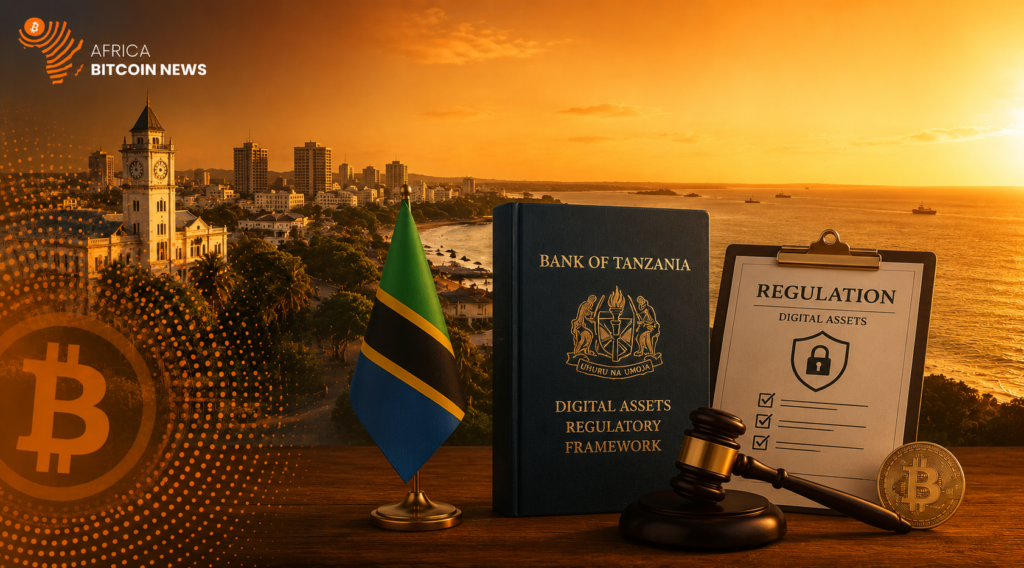
In 2019, the Bank of Tanzania issued explicit public warnings against Bitcoin and digital asset trading, pointing to the risks of operating without legal safeguards. In July 2026, that same institution announced it is finalising a comprehensive regulatory framework to govern those same assets.

Seven Years, One Complete Reversal

Bank of Tanzania Governor Emmanuel Tutuba made the announcement during a visit to the Bank of Tanzania pavilion at the 50th Dar es Salaam International Trade Fair, held July 13 to 14, 2026. Rather than discouraging participation, authorities are now working to introduce rules that promote responsible innovation while strengthening investor protection and preserving financial stability.

“We are currently finalising the preparation of laws and regulations for the supervision of digital assets, particularly virtual assets, cryptocurrencies and stablecoins, so that we can strengthen regulation and oversight,” Governor Tutuba said. He added that digital assets are increasingly being adopted worldwide, making it necessary for Tanzania to develop an appropriate regulatory approach. “Many young people are investing in this area, but we have also received complaints from people who have lost money,” he noted.
A Policy Shift Built Over Two Years

Tanzania’s regulatory pivot did not arrive overnight. In 2024, the country introduced a 3% withholding tax on digital asset transactions under the Finance Act, signalling that authorities viewed Bitcoin and digital assets less as a threat and more as a taxable economic reality. Then in May 2026, the Bank of Tanzania approved a stablecoin sandbox pilot, giving regulated entities a controlled environment to test digital payment products under central bank supervision.

The central bank has also been expanding its financial infrastructure, rolling out the Tanzania Instant Payment System which integrates traditional banking with mobile money operators including M-Pesa and Tigo Pesa. Bringing Bitcoin and virtual assets into a supervised framework represents the next phase of that evolution, with Tanzania targeting 85% digital financial inclusion by 2028.

What It Means for Bitcoin in Tanzania

For Bitcoin holders, users, and service providers operating in Tanzania, a formal regulatory framework brings legal clarity that has been absent since Bitcoin first gained traction in the country. ChapSmart, the Tanzanian startup that bridges the Lightning Network directly to M-Pesa for remittances and bill payments, has been operating in a regulatory grey area alongside every other Bitcoin-adjacent service in the country. A published framework, whatever its final shape, removes that uncertainty.

Sub-Saharan Africa pulled in more than $205 billion in on-chain value in the past year alone. Tanzania has now joined Kenya, Nigeria, Ghana, and South Africa in moving from restriction to structured oversight of Bitcoin and digital assets.

ENJOYED THIS ARTICLE?Support the authorSend a zap over Lightning or on-chain