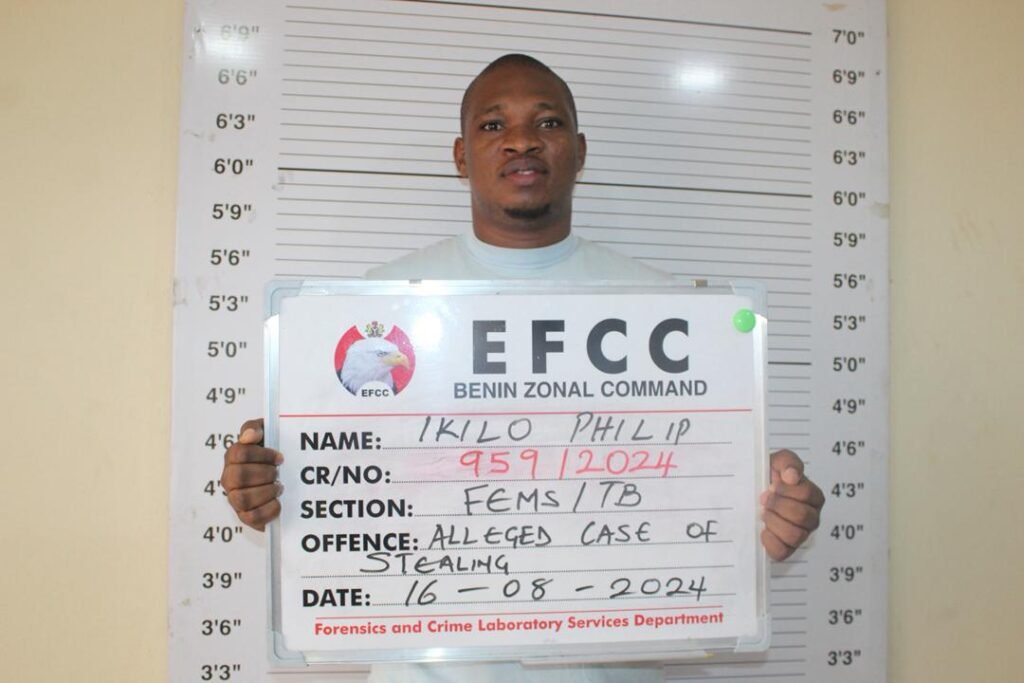
In a significant ruling for the digital asset space in Nigeria, the Edo State High Court has sentenced Osamudiamen Philip Ikilo to two years in prison for Bitcoin-related theft.
The judgment, delivered by Justice W.I. Aziegbemhin in Benin City, marks a firm stance against fraudulent activities within the local cryptocurrency ecosystem.
The Details of the Case
The conviction follows a petition from Ms. Cynthia Imade Alile, who reported the fraudulent conversion of her assets to the Economic and Financial Crimes Commission (EFCC).
According to court proceedings:
The Asset: The victim entrusted Ikilo with 0.52092582 Bitcoin, valued at approximately $19,400 at the time of the incident in March 2024.
The Incident: Ikilo offered to assist Ms. Alile in converting her Bitcoin into local currency. However, after the transfer, he failed to remit the funds and instead converted them for his personal use.
The Charge: He was prosecuted on a one-count charge of stealing, which is a violation of Section 287 of the Criminal Law of Edo State (2022).
The Court’s Verdict
Although the defendant pleaded “not guilty” during his initial arraignment, the prosecution led by A.S. Bala-Ribah presented witnesses and documented evidence that ultimately proved the case.
On Monday, March 23, 2026, Justice Aziegbemhin found Ikilo guilty and sentenced him to two years of imprisonment. Notably, the judge did not provide an option for a fine, emphasizing the severity of the breach of trust.
A Warning for the Ecosystem
This case highlights the ongoing efforts by the EFCC to police the “grey areas” of digital asset transactions in Nigeria. As Bitcoin adoption grows, legal experts suggest that users should prioritize licensed platforms and secure, non-custodial methods for conversion to avoid similar peer-to-peer (P2P) pitfalls.