Kenya’s National Treasury Unveils Draft VASP Regulations 2026: What Bitcoin Builders Need to Know

DEVELOPMENT

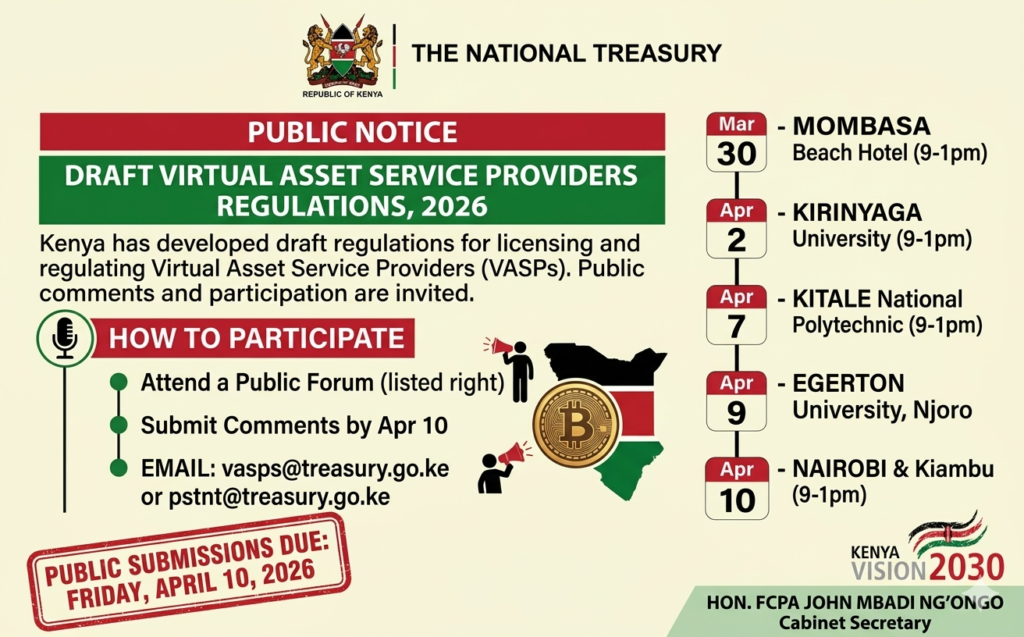
The landscape for digital assets in Kenya is entering a formal phase. The Central Bank of Kenya recently issued a Public Notice regarding the Draft Virtual Asset Service Providers (VASP) Regulations, 2026. This move, following the VASP Act of 2025, aims to establish a clear legal framework for any entity providing Bitcoin or digital asset services within the country.

For the local ecosystem, this transition from an informal market to a regulated one brings a new set of realities for developers, merchants, and everyday users.

The Shift in Operational Reality

For years, Bitcoin projects in Kenya have thrived through grassroots adoption. However, operating without a formal framework often created “bottlenecks,” particularly regarding institutional integration and reliable access to traditional financial rails.

The proposed 2026 regulations introduce several key shifts:

  • Licensing Requirements: Entities providing exchange, custody, or transfer services will likely need to undergo a formal licensing process with the Capital Markets Authority (CMA) or Central Bank of Kenya (CBK).

  • Consumer Protection Standards: The draft suggests new mandates for how service providers handle user funds and data privacy.

  • Standardized Compliance: Projects will need to align with national Anti-Money Laundering (AML) and “Know Your Customer” (KYC) standards, a move that aims to bring Kenya in line with global financial task force recommendations.

Impact on Local Bitcoin Innovation

The introduction of the Kenya VASP Regulations 2026 serves as a signal that the digital asset sector has reached a scale the government can no longer ignore.

For established startups, this could mean an easier path to securing venture capital and insurance, as the “regulatory risk” becomes more defined. For grassroots and circular economy projects, the primary concern will be the cost of compliance and whether the regulations allow for “tiered” licenses that keep the barrier to entry low for small-scale innovators.

A Window for Public Dialogue

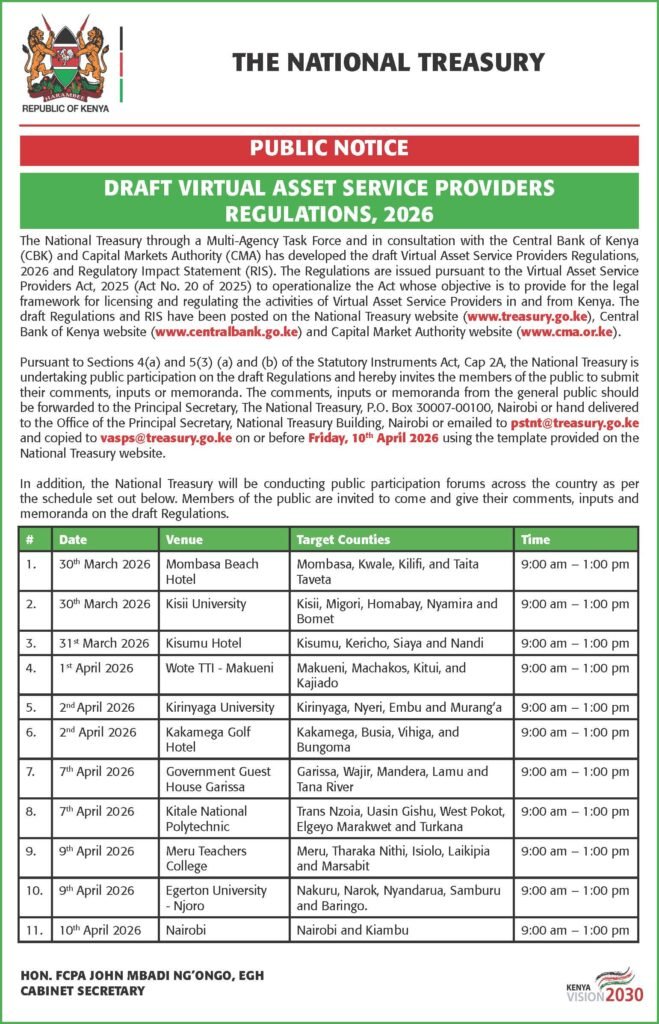
The Treasury has emphasized that these regulations are currently in draft form. To ensure the final rules reflect the practical needs of the “Silicon Savannah,” a series of public participation forums have been scheduled across the country from March 30 to April 10, 2026.

These forums offer a platform for the community to provide technical feedback on:

  • The Definition of “Service Provider”: Ensuring that non-custodial developers and individual nodes are not unfairly categorized.

  • Compliance Burdens: Suggesting ways to maintain high security without stifling the speed of innovation.

  • Financial Inclusion: Highlighting how Bitcoin currently serves the underbanked and ensuring the new rules do not cut off their access.

Next Steps for the Community

The window for submitting comments, inputs, or memoranda ends on Friday, April 10, 2026. Submissions can be sent directly to the National Treasury via email at vasps@treasury.go.ke.

Regardless of your stance on policy, this period of public participation is the most direct way to ensure that the unique utility of the Bitcoin network—its ability to provide low-cost, borderless value transfer—remains protected within Kenya’s evolving legal framework.