
How African central banks are responding to Bitcoin in 2026 (Nigeria’s SEC stance, Kenya’s VASP framework, South Africa’s FSCA licensing)
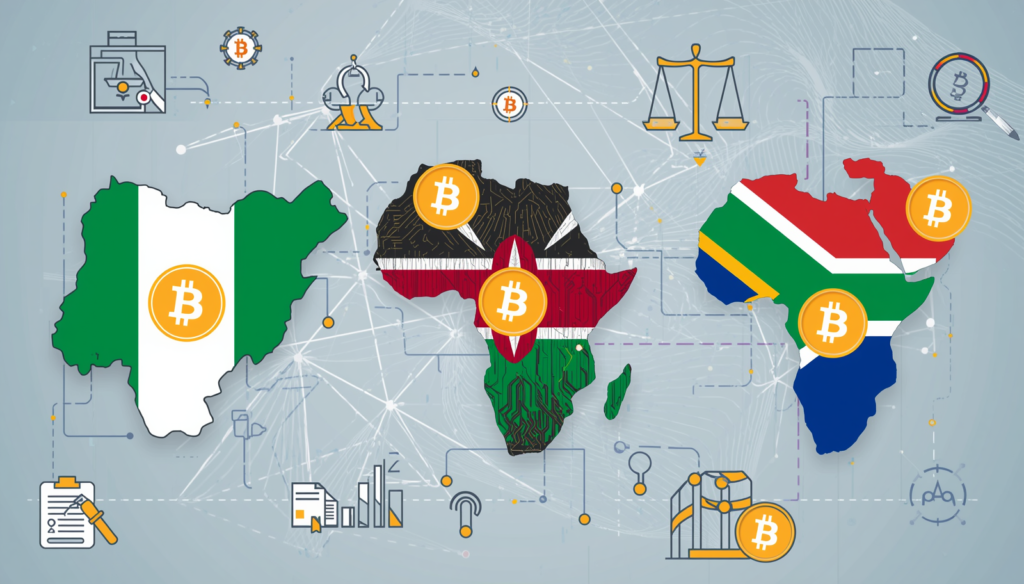
Africa’s relationship with Bitcoin is changing fast. Just five years ago, most central banks on the continent treated crypto as a threat. Today, the picture looks very different.
Three countries lead the shift: Nigeria, Kenya, and South Africa. Each one has built a clear set of rules for Bitcoin and other digital assets. And each is taking a different path.
In this article, we break down what these regulators are doing in 2026. We look at Nigeria’s SEC stance, Kenya’s new VASP framework, and South Africa’s FSCA licensing system. By the end, you will see where Africa’s biggest crypto markets are headed.
Why 2026 Is a Turning Point
Africa has long been one of the most active Bitcoin regions in the world. Chainalysis ranks Nigeria, Kenya, and South Africa among the top crypto markets globally. Adoption has been driven by inflation, weak local currencies, and high remittance fees.
But for years, regulators stayed quiet. Or worse, they pushed back hard. The 2021 ban by the Central Bank of Nigeria is a good example.
That has changed. In 2026, all three countries have working laws and licensing rules. The shift signals a new era for African Bitcoin builders, traders, and users.
Nigeria: From Ban to Full Recognition
Nigeria has come a long way. In 2021, the Central Bank of Nigeria (CBN) banned banks from processing crypto transactions. The country still ranked first globally for peer-to-peer Bitcoin volume during that period.
Then came the big change. In March 2025, President Bola Ahmed Tinubu signed the Investments and Securities Act (ISA) 2025 into law. This act officially classified digital assets as securities under the Securities and Exchange Commission (SEC).
What the SEC Now Controls
The Nigerian SEC is now the main regulator for crypto. Every exchange, wallet provider, or token issuer that serves Nigerian users must apply for a license. This rule applies whether the company is based in Lagos, London, or anywhere else.
The SEC issues a Digital Asset Exchange (DAX) license under its Accelerated Regulatory Incubation Programme (ARIP). So far, only a few startups have received provisional licenses. Quidax and Busha are the best-known examples.
Banks Are Back in the Game
The CBN reversed its 2021 stance in late 2023. Today, Nigerian commercial banks can legally open accounts for SEC-licensed crypto firms. This makes fiat on-ramps and off-ramps much easier for users.
However, every token must get SEC approval before listing. Anonymous trading is banned. And staking and lending services still sit in a grey area.
New Tax Rules in 2026
The Nigeria Tax Administration Act (NTAA) 2025 took full effect in January 2026. It brings crypto profits into the personal income tax system. Capital gains tax can reach up to 25% on crypto trading profits.
For Nigerian Bitcoin users, this means one thing: keep good records. Tax reporting is now part of the game.
Kenya: A New VASP Framework Takes Shape
Kenya has taken a different route. The country avoided full bans. Instead, it built a clear legal framework from scratch.
The base law is the Virtual Asset Service Providers (VASP) Act, 2025. President William Ruto signed it in October 2025. It came into force on November 4, 2025.
Draft Regulations Released in 2026
The Act is just the foundation. The real rules came later. On March 17, 2026, the National Treasury released the draft Virtual Asset Service Providers Regulations, 2026.
The draft was prepared by a Multi-Agency Task Force. It included input from the Central Bank of Kenya (CBK) and the Capital Markets Authority (CMA). Public consultations ran until April 10, 2026.
Who Regulates What?
Kenya uses a split-oversight model. The CBK handles payment-related crypto activities. This includes stablecoins, custody, and conversion rails.
The CMA, on the other hand, oversees exchanges, brokers, and tokenization platforms. Both regulators share authority based on the type of activity.
Strict Rules for Crypto Firms
Kenya’s draft rules are tough. Only locally registered companies can apply for full licenses. Foreign firms must get a compliance certificate first.
VASPs must also keep a physical office in Kenya. Directors and senior officers go through background checks. Stablecoin issuers face the steepest rules. They must hold up to 500 million Kenyan shillings (about $3.86 million) in paid-up capital.
Industry Pushback
Not everyone is happy. More than 50 crypto firms have formed the Virtual Asset Association of Kenya (VAAK). The group worries that high capital requirements will push small startups offshore.
The fear is real. If only large players can afford to operate, Kenya’s local Bitcoin builders may lose ground. The final rules are expected after the Treasury reviews public feedback.
The Tax Reset
Kenya also fixed an unpopular tax. The 3% Digital Asset Tax on transaction value has been scrapped. It is now replaced with a 10% excise duty on VASP service fees.
This is a big win for long-term Bitcoin holders. It also helps peer-to-peer users who were unfairly hit by the old rule.
South Africa: The FSCA Leads the Way
South Africa has the most mature crypto framework on the continent. The Financial Sector Conduct Authority (FSCA) declared crypto assets as financial products back in October 2022. Licensing began on June 1, 2023.
How the License Works
Crypto Asset Service Providers (CASPs) must hold a Financial Service Provider (FSP) license. The license falls under the Financial Advisory and Intermediary Services Act (FAIS).
Operating without a license is a criminal offence. Penalties include heavy fines and up to 10 years in prison. So compliance is not optional.
Licensing Numbers Tell a Story
By January 2026, the FSCA had received 512 license applications. Of these, 300 were approved, 14 were declined, and 121 were withdrawn. The rest are still under review.
Most rejections came down to two issues. First, weak business plans and operational frameworks. Second, lack of real experience in crypto assets.
Who Needs a License?
Not every Bitcoin player needs to apply. Miners and node operators are exempt. NFT service providers are also outside the current rules.
But exchanges, wallet providers, custodians, and brokers must all be licensed. Lending platforms and stablecoin issuers fall under the same rule.
The Travel Rule Is Live
South Africa also enforces the FATF Travel Rule. The Financial Intelligence Centre (FIC) issued Directive 9, which took effect on April 30, 2025. CASPs must now share sender and receiver details for crypto transfers above a set threshold.
A Tougher Draft on the Horizon
Things may get stricter. In late April 2026, the government published the Draft Capital Flow Management Regulations 2026. These would replace South Africa’s old 1961 exchange control rules.
The draft proposes some serious powers. Officers could compel users to share passwords, PINs, or private keys. Refusing would be a criminal offence.
Residents holding Bitcoin above a set threshold would also need to declare their holdings. The deadline would be 30 days. Crypto exports without Treasury permission would be banned.
The Bitcoin community has reacted strongly. Many see this as a step too far. The final shape of these rules is still being debated.
What This Means for African Bitcoin Users
So what should you take away from all this? A few clear points stand out.
First, Bitcoin is no longer in a legal grey zone in these three countries. You can buy, hold, and trade it. But you must use licensed platforms.
Second, taxes are now part of the deal. Whether you trade in Lagos, Nairobi, or Cape Town, your gains are likely taxable. Keep records of every transaction.
Third, builders face higher costs. Capital requirements, compliance teams, and legal fees all add up. This may slow down small startups. But it could also build trust with banks and global investors.
Finally, Bitcoin self-custody is still protected. The laws focus on companies that hold customer funds. If you run your own node and hold your own keys, the rules barely touch you.
Looking Ahead
Africa’s regulatory map is now clearer than ever. Nigeria has chosen securities classification. Kenya has built a split-oversight model. South Africa leads on full FSP licensing.
Each path has trade-offs. But all three signal the same thing. Bitcoin is here to stay on the continent, and governments now want a seat at the table.
For Bitcoin builders, the message is simple. Read the rules. Get licensed where needed. And keep building.
The next few years will show whether these frameworks help or hurt Africa’s place in the global Bitcoin economy. One thing is certain: the days of regulatory silence are over.