
Geyser Is Rethinking Capital for Africa’s Bitcoin Economy
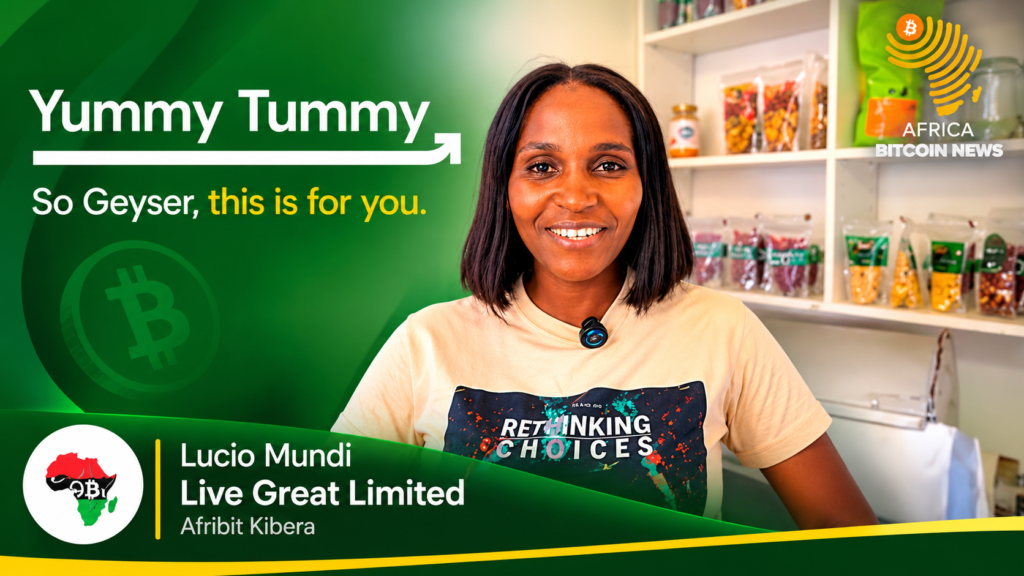
The cost of growing a small business.
You have customers. You have a product people want. Perhaps you have even started accepting Bitcoin. Business is picking up and you know that purchasing more stock, getting a freezer or investing in better equipment could make a meaningful difference.
But there is one problem: capital.
You approach a lender and suddenly, growing your business comes with conditions. Interest accumulates. Repayment dates become obligations. Your business might be doing well today, but what happens when sales slow down tomorrow?
For many small African entrepreneurs, accessing money is not necessarily the hardest part. Accessing it on terms that allow the business to survive and grow is another story.
This is where an interesting question emerges:
What if business growth didn’t have to begin with debt?
That question sits at the heart of Geyser’s evolving approach to financing Bitcoin circular economies in Africa.
And it could represent a meaningful shift in how local communities think about capital, trust and economic participation.
From crowdfunding to community-backed capital.
Geyser is not entirely new to the African Bitcoin ecosystem.
But over time, an important question became harder to ignore: what happens after a community successfully raises the money?
A project might receive donations, purchase equipment, conduct training and onboard merchants. That is valuable. But what happens when the same merchants need more stock, better equipment or working capital to keep their businesses operating?
Traditional crowdfunding is generally designed around contributions flowing in one direction. Once the money is spent, another fundraising campaign may be necessary.
Geyser’s move towards Circular Grants, previously described as recoverable grants, attempts to rethink that cycle.
Rather than simply funding projects and moving on, the model seeks to help local entrepreneurs grow while creating an opportunity for capital to support another business in the future.
According to Geyser, Circular Grants provide funding without compulsory repayment. Recipients who are able to do so can voluntarily return some or all of the funds into a Community Fund, which can then support another entrepreneur.
It is an important distinction: this is not a conventional loan dressed up as a grant.
The underlying idea is simple: help someone grow today, and give them the opportunity to help someone else grow tomorrow.
The missing link: capital that understands the community.
One of the most interesting aspects of Geyser’s model is that it does not assume that an entrepreneur’s credibility can be established through paperwork alone.
In many underserved communities, a business owner may have an established customer base, a history of reliable trading and a good reputation among neighbours, yet still struggle to meet the requirements of formal financing institutions.
Conversely, someone thousands of kilometres away might be willing to contribute Bitcoin to a promising business but have little way of knowing whether the entrepreneur is legitimate or whether the money will achieve its intended purpose.
This creates two different problems: entrepreneurs struggle to access capital, while potential supporters struggle to establish trust.
Geyser’s answer is its Field Partner network.
Geyser works with trusted local organisations that understand the communities they serve.
In Kenya, two notable examples are:
Afribit Kibera: Working with small retailers, food vendors, barbers and other merchants in Kibera.
₿itBiashara: Supporting entrepreneurs and everyday Bitcoin transactions around Tena Estate and its wider Nairobi community.
These organisations are not simply names attached to fundraising campaigns. Their local presence allows them to identify businesses, assess their needs, help prepare funding proposals and maintain relationships with entrepreneurs after the money has been received.
Afribit, for example, describes its merchant programme as combining Bitcoin education, Lightning onboarding, point-of-sale support and ongoing mentorship. Its objective is to establish businesses that can use Bitcoin in everyday trade.
That distinction matters.
A business does not become financially resilient simply because it starts accepting Bitcoin. It also needs customers, reliable suppliers, sufficient stock, appropriate equipment and the working capital to keep operating.
Geyser’s approach attempts to connect these practical requirements with the Bitcoin community’s capacity to provide funding.
What does a Circular Grant actually look like?
Let’s bring the model down to the level of an ordinary business.
The owner has customers and accepts Bitcoin, but limited working capital prevents them from purchasing products in bulk. They consequently miss sales opportunities and may pay more for smaller quantities.
A Circular Grant could help the owner purchase additional stock or equipment.
The process generally follows four stages:
Identification and verification
A local Field Partner identifies a credible entrepreneur with a specific business need and a practical growth proposal.
Geyser provides the crowdfunding infrastructure through which supporters contribute Bitcoin towards the approved business objective.
The funding supports the proposed investment, such as stock, equipment or business expansion.
When the business is financially able, the recipient can voluntarily contribute some or all of the original grant value towards a community fund for another entrepreneur.
The final stage is what makes this model particularly interesting.
There is no compulsory instalment demanding payment when business is slow. The recipient is not expected to sacrifice the stability of their business to satisfy a repayment deadline.
Instead, the expectation is built around capacity, community responsibility and the possibility of helping someone else when circumstances permit.
Geyser’s published model describes returned funds as capital that can be allocated to future Circular Grants through its impact fund.
What comes next for Africa's Bitcoin economy?
Geyser’s transition from conventional crowdfunding towards Circular Grants raises an important possibility for the continent’s grassroots Bitcoin movement.
Africa does not simply need more Bitcoin adoption campaigns. It needs practical economic infrastructure that helps existing businesses survive, grow and participate in the digital economy.
The combination of local knowledge, international Bitcoin contributions and voluntary community reinvestment offers one possible route.
Kenya’s emerging examples, from Kibera to Tena Estate, provide a useful starting point for understanding how this could work in practice.
The real test will be whether the model can grow without compromising its principles: accessibility, accountability, voluntary participation and community ownership.
And perhaps the most important question is no longer simply how many people are adopting Bitcoin.
It is how many people are becoming economically stronger because they can use it.
Can community-funded capital change African entrepreneurship?
If you are a Bitcoin merchant, entrepreneur, community builder or someone interested in grassroots financial inclusion, we would like to hear your perspective.
Would you trust a community-backed, interest-free grant model over conventional business financing? What safeguards would make such a model sustainable in your community?
Explore Geyser’s Circular Grants, support a local entrepreneur and join the conversation about building stronger Bitcoin circular economies across Africa.
Get the Weekly Brief
Essential African Bitcoin news, curated for builders. No spam.
"*" indicates required fields