
What If Everything You Think You Know About Bitcoin in Kenya Is Wrong?
You have heard the stories. A neighbour lost money to a “crypto” scheme. Mainstream headlines called it a scam. The Central Bank warned against it. M-Pesa works fine, so why bother with something complicated and volatile?
Bitcoin, you decided, is either a get-rich-quick gamble or a digital mirage reserved for tech bros and foreigners.
What if that belief is the real trap?
What if the biggest risk is not Bitcoin itself, but the absence of honest education that separates it from the noise? What if the people who lost money were never taught the difference between a decentralised monetary network and a random token with a flashy website? And what if the real opportunity in Kenya is not speculation, but the quiet, practical ability to hold, send, and spend value without permission?
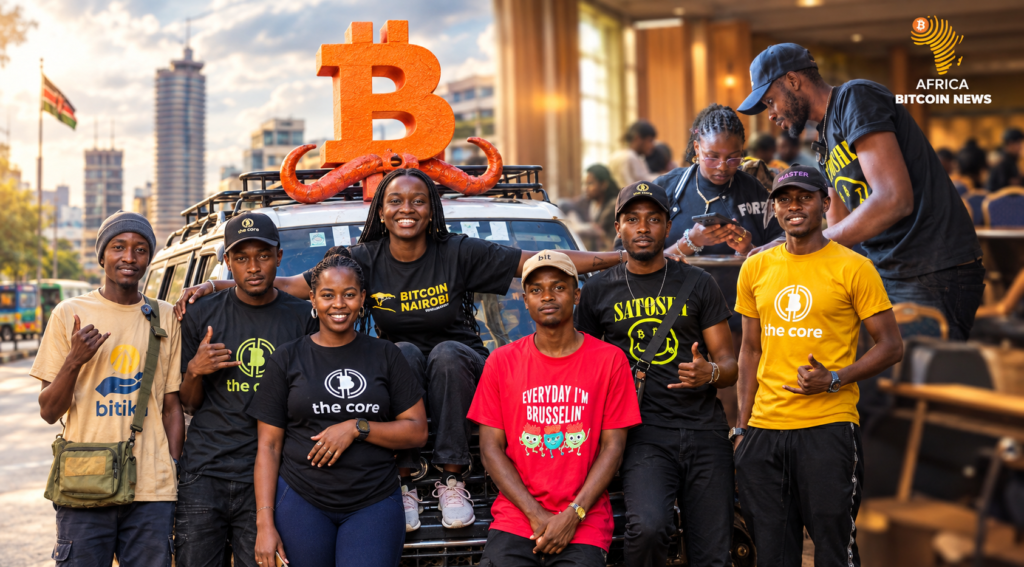
This is the gap The Core, founded by Felix Mukungu, has been closing since late 2023. Through free structured education, hands-on meetups and local circular economies, the platform is proving that Bitcoin literacy can turn scepticism into sovereignty—one graduate, one merchant, and one sats transaction at a time.
Have You Ever Been “Kuoshwa”?
In Kenyan streets the word carries weight. Kuoshwa—being washed, cleaned out, scammed. For many young people the first introduction to “Bitcoin” arrived through a pyramid scheme, a fake token, or a promise of overnight riches. The loss became the lesson. Trust evaporated. Bitcoin and crypto blended into one toxic soup.
Felix Mukungu knows that path. His own entry into the space began with a pyramid scheme. The experience did not make him abandon digital money. It made him ask a harder question: why was there no clear, accessible framework that explained what money actually is, why the current system fails so many, and how Bitcoin differs from the schemes that prey on hope?
The Core
The organisation runs free online Bitcoin Diploma courses built on the open curriculum from My First Bitcoin. Over roughly two months, students meet three evenings a week. They start not with price charts but with the history and properties of money. They learn how to set up wallets, send and receive sats on Lightning, and understand self-custody. Graduates leave with a certificate and real sats in their own wallets—not as a marketing gimmick, but as lived proof that the network works.
The pain point is not ignorance. It is the absence of trustworthy, local education that meets people where they are. Without it, the cycle continues: scam, loss, distrust, avoidance. With it, the cycle breaks.
What Happens When Education Stops at a Photo Op?
You have seen the version of “adoption” that looks good on social media. Someone hands a taxi driver a few hundred sats, takes a selfie, and disappears. The driver has no idea how to secure the wallet, where to spend the sats, or who to ask when something goes wrong. Merchants who experiment with acceptance soon abandon it because customers never return and support never arrives.
This is not education. It is theatre.
The Core refuses that model. Its monthly meetups move beyond slides. Attendees set up wallets live. They send and receive sats. They ask the awkward questions. The sessions travel—from Nairobi CBD to Thika, Nakuru, Kiambu, and now further afield. The goal is simple: turn theory into muscle memory and isolated learners into a connected community.
The same logic drives Bitcoin Githurai, the circular-economy project in a Nairobi settlement Felix once called home. Merchants—boda riders, food vendors, small shop owners—receive onboarding packages: Lightning wallets, stickers, QR codes, and training. Education comes first. Transactions follow. The result is not a publicity stunt. It is a living network where sats circulate locally because people understand what they are holding and why it matters.
Can You Really Build Sovereignty on a Campus Lawn?
On Saturday, 26 September 2026, The Core brings its 14th monthly Bitcoin meetup to Murang’a University of Technology. From 9:00 a.m. to 2:00 p.m. in the Assembly Hall, students and locals will walk through the evolution of money, set up wallets, transact live, and wrestle with the bigger “why.” Refreshments, merch, and sats rewards will be part of the day. Capacity is limited.
Register here: https://luma.com/u04ukf9k
University campuses are not neutral ground. They are pressure cookers of ambition, limited opportunity, and digital curiosity. Many students have already been targeted by token schemes. Others simply wonder whether any form of money can outrun inflation or open doors beyond the formal banking system. A five-hour session will not solve every problem. It can, however, plant a different belief: that understanding money is a skill, not a secret, and that Bitcoin can be a tool rather than a trap.
Does Impact Look Like Numbers or Neighbours?
The Core’s work is measured in cohorts graduated, sats distributed across borders, merchants onboarded, and unconferences that put East African builders on stage instead of flying them out. Multiple cohorts have completed the Diploma. Graduates have come from Kenya, Sierra Leone, Ghana, Nigeria, Uganda and beyond. The platform has hosted Bitcoin Unconferences that showcase grassroots projects rather than imported narratives.
Yet the deeper impact is quieter. It is the graduate who can explain the difference between Bitcoin and a scam token to a relative. It is the merchant who no longer treats Lightning payments as an experiment. It is the young person who realises that self-custody is not a technical hobby but a form of agency in an economy that often feels stacked against them.
Felix Mukungu and the team do not claim Bitcoin will fix everything. They claim something more modest and more radical: that without clear education, Bitcoin remains either a rumour or a risk. With it, ordinary Kenyans gain the ability to decide for themselves.
What Belief Are You Willing to Question?
If you still see Bitcoin only as a speculative asset or a scam vector, the question is not whether the technology is perfect. The question is whether the alternative—remaining dependent on systems that have repeatedly failed large parts of the population—is safer.
The Core’s answer is practical. Free courses. Hands-on meetups. Local circular economies. And an open invitation to show up, ask hard questions, and test the network with your own hands.
The 14th meetup at Murang’a University of Technology is one more chance to do exactly that. Whether you arrive sceptical, curious, or already convinced, the session will force the same confrontation: what do you actually know about money, and who benefits when you remain in the dark?
Bitcoin for everyone starts with education that refuses to leave anyone behind. The Core, under Felix Mukungu’s leadership, is proving it can be done—from Nairobi settlements to university halls across Kenya. The only remaining question is whether you will keep the old story, or rewrite it.
Secure your spot for Meetup 14: https://luma.com/u04ukf9k
Get the Weekly Brief
Essential African Bitcoin news, curated for builders. No spam.
"*" indicates required fields