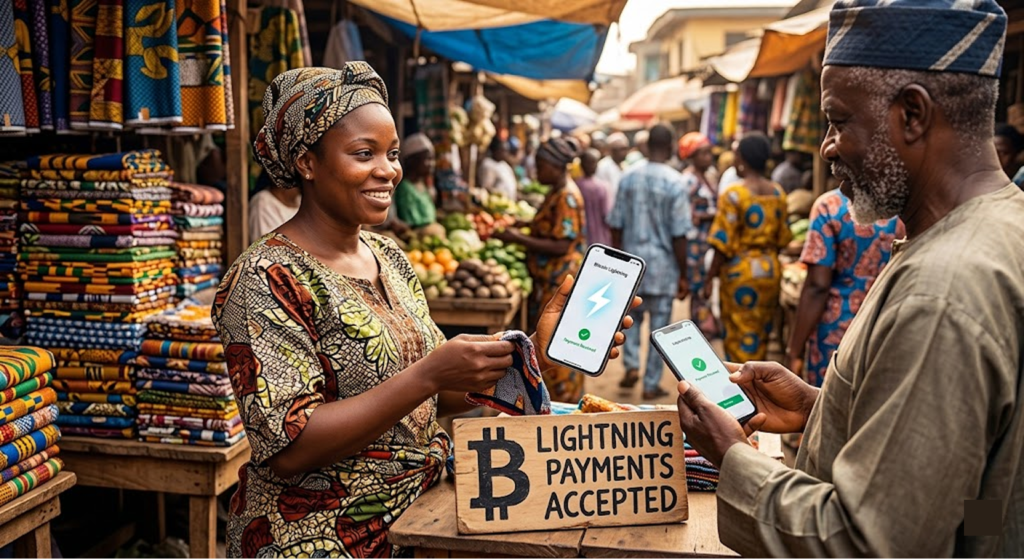
The question of whether Bitcoin will ever achieve total acceptance in Africa is no longer just a theoretical debate. It is a reality unfolding in real-time across the continent’s bustling markets and digital hubs.
While critics often focus on price volatility, the African perspective is different. For many, Bitcoin is not a speculative “get-rich-quick” scheme. Instead, it is a vital tool for economic survival and financial sovereignty.
From Mobile Money to the Satoshi Era
Africa has a long history of leapfrogging traditional financial systems. The success of mobile money platforms like M-Pesa proved that the continent does not need traditional banks to achieve financial inclusion.
Today, Bitcoin is the natural evolution of that trend. It offers a decentralized alternative to fragile banking infrastructures, allowing for faster and cheaper transactions. By building on the foundations of mobile money, Bitcoin is moving from a fringe technology into a practical, everyday asset.
Solving Real-World Problems: Inflation and Remittances
The true driver of Bitcoin acceptance in Africa is necessity. Many nations face high inflation rates and currency volatility that erode the savings of ordinary citizens. In this environment, Bitcoin serves as a “digital life raft.” It provides a way to preserve value when local currencies falter.
Furthermore, the cost of sending money across African borders remains among the highest in the world. Bitcoin and the Lightning Network provide a borderless solution. This allows families to receive remittances instantly and at a fraction of the cost charged by traditional services.
The Regulatory Tug-of-War
Despite its utility, the path to universal acceptance has hurdles. Governments across the continent are grappling with how to regulate a technology that exists outside their direct control.
While some nations are moving toward clear licensing frameworks, others have attempted to launch Central Bank Digital Currencies (CBDCs). However, the slow adoption of these state-backed tokens suggests a clear preference. The public seems to favor the transparency and decentralization of Bitcoin over government-led digital alternatives.
The Verdict: A Future Defined by Grassroots Innovation
So, will Bitcoin be truly accepted? The answer is already visible in the streets.
Bitcoin’s future in Africa will not be decided by grand policy shifts or institutional endorsements. Instead, it will be shaped by the ingenuity of ordinary people. Whether it is a small business owner in Lagos or a rural community in Kenya, adoption is happening from the bottom up.
As long as Bitcoin continues to solve local problems better than the status quo, its place in Africa’s financial fabric is not only likely—it is inevitable.