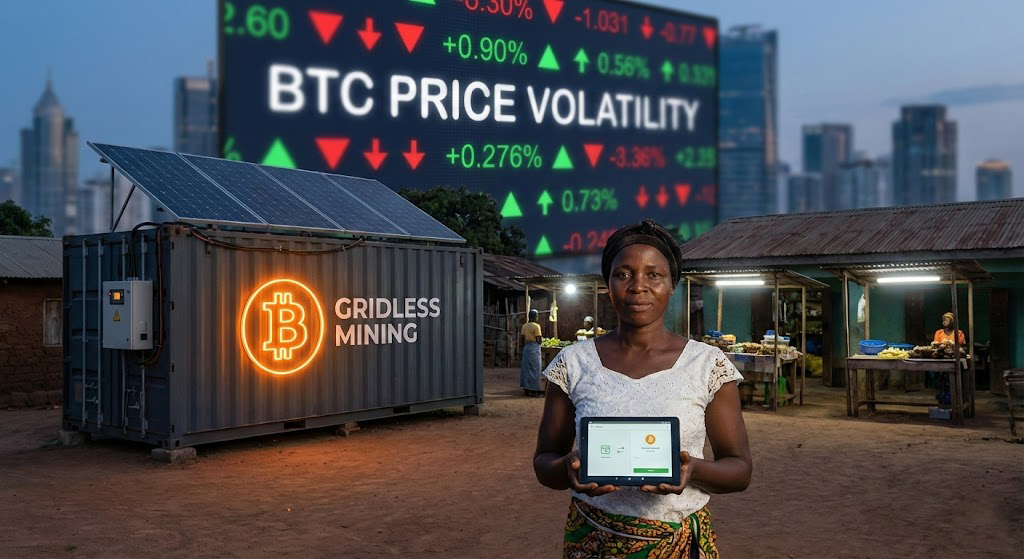
If you spent the last 48 hours looking only at price charts, you’d think the Bitcoin “experiment” was under pressure. With Bitcoin dipping below the $80,000 mark for the first time in nearly a year, the usual global headlines have returned to their favorite hobby: mourning the “death” of digital assets.
But if you look at the ground in Nairobi, Lagos, or Pretoria, you see a completely different reality. While the West tracks the price of the asset, Africa is building the plumbing of a new world.
1. The Legal Sovereignty Win
Just yesterday, the Pretoria High Court in South Africa handed the industry a massive, albeit quiet, victory. By ruling that Bitcoin does not fall under antiquated 1961 exchange control regulations, the court essentially acknowledged that our digital future cannot be governed by a “paper and ink” past. This isn’t just a win for traders; it’s a signal to every African entrepreneur that the path to a borderless economy is being cleared of regulatory debris.
2. Mining as a “Green Battery”
While critics still harp on Bitcoin’s energy usage, rural Africa is proving them wrong. In 2026, we see projects like “Gridless” and “SustainSolar” using Bitcoin mining to stabilize mini-grids in villages that previously had no reliable power. By acting as an “immediate buyer” of excess energy, mining is making rural electrification projects profitable. We aren’t just mining “sats”; we are mining light, education, and cold storage for medicines in regions the traditional grid forgot.
3. The “Invisible” Lightning Rails
The most exciting development isn’t happening in corporate boardrooms; it’s happening in the code. We are seeing a shift where the Bitcoin Lightning Network is becoming the “invisible” rail for everyday payments, completely detached from price speculation.
Take Machankura, for example. It allows anyone with a basic feature phone (no internet required) to send and receive Bitcoin via USSD code. A user in rural Ghana doesn’t care what the BTC/USD chart looks like; they care that they just received a payment instantly, without a bank account, on a 15-year-old Nokia.
Similarly, companies like Bitnob are using the Lightning Network to facilitate cross-border payments and remittances that undercut traditional players like Western Union by massive margins. To the end user receiving local currency in their bank account in Lagos, Bitcoin wasn’t a volatile asset they held; it was simply the fastest, cheapest delivery mechanism in history.
Conclusion
We are living through a “Utility Peak.” The infrastructure being built today—from the Bitcoin++ developer ecosystem in Nairobi to the high courts of South Africa—is far more valuable than the temporary fluctuations on a Coinbase chart.
The price is noise. The adoption is the signal. In Africa, we aren’t waiting for the price to go “to the moon”; we are busy building on the ground.