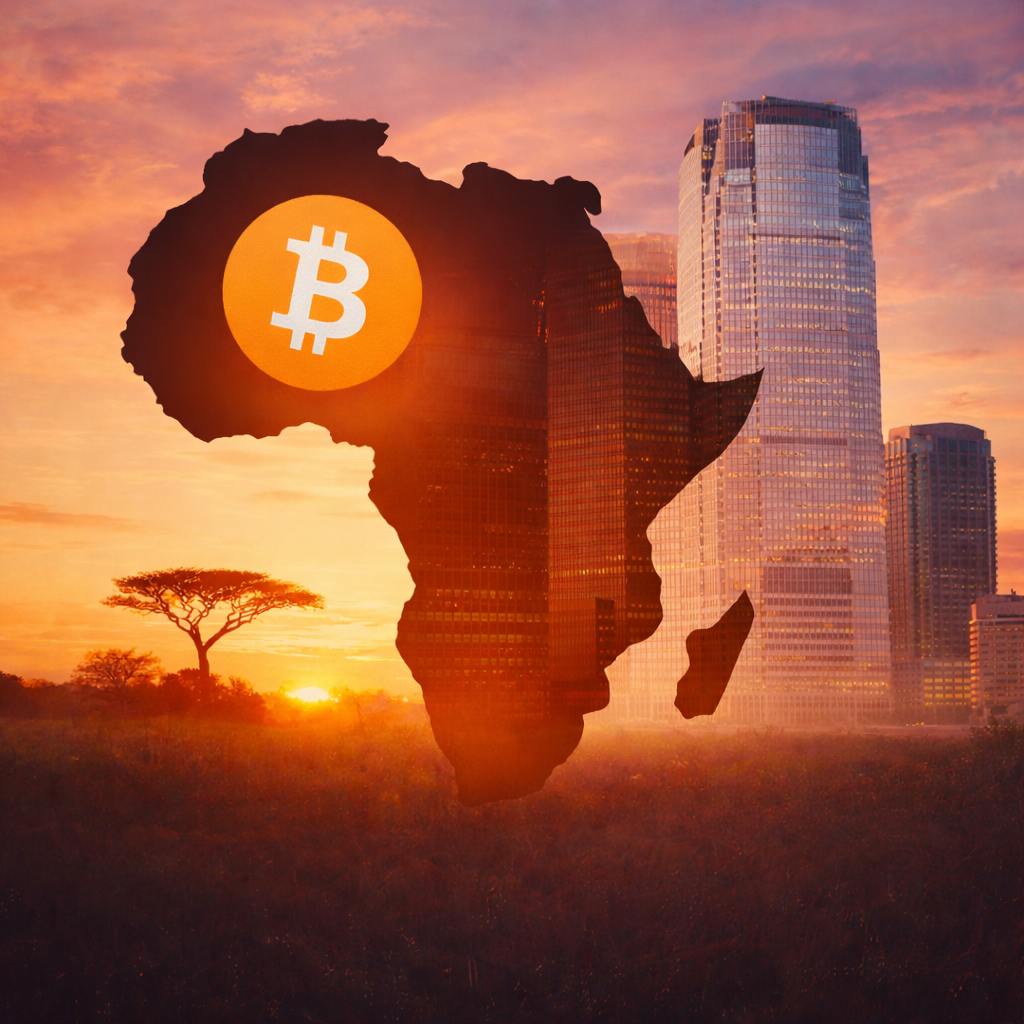
Goldman’s move signals something deeper: Bitcoin is no longer fringe. It is increasingly embedded in global financial markets.
That creates regulatory pressure worldwide — including in Africa.
If major U.S. institutions are allocating billions to Bitcoin exposure, it becomes harder for regulators elsewhere to frame it purely as speculative or destabilizing.
African policymakers now face a choice:
Bitcoin policy advocate Alex Gladstein (X: https://x.com/gladstein), Chief Strategy Officer at the Human Rights Foundation, has long argued:
“Bitcoin thrives where monetary instability is highest.”
That reality is particularly relevant across emerging African economies facing inflation and capital control challenges.
Capital, Infrastructure, and the African Opportunity
Institutional adoption strengthens global liquidity and infrastructure. As Bitcoin becomes more entrenched in financial systems, African Bitcoin startups building on the Lightning Network or cross-border settlement rails may benefit from:
-
Increased global investor confidence
-
More stable market conditions
-
Broader institutional integration
Africa did not wait for Wall Street’s approval to adopt Bitcoin. Adoption here has been organic and bottom-up. But institutional validation strengthens the long-term outlook.
The Bigger Question
Goldman Sachs expanding Bitcoin exposure is not just a Wall Street headline.
It’s a signal.
A signal that Bitcoin is becoming embedded in global finance — while across Africa, it continues functioning as monetary infrastructure.
As institutions accumulate, Africa continues to build.
And in the long run, usage , not exposure, may prove to be Bitcoin’s strongest foundation.