These are my ideas, not Spiral’s list. Spiral has not said it will fund any of them.
- African languages. Most top AI models handle African languages poorly. Open datasets with clear sources, fair benchmarks, or fine-tuning work for specific languages would stand out.
- Tools that work offline. Think farming advice, simple health checks, or learning tools that don’t need a connection.
- Open infrastructure. Better tools for running AI agents on weak hardware, or ways to check and test open models.
Spiral also points to its own projects as examples of what it cares about: the Open Intelligence Kit and mesh-llm, a peer-to-peer way to run open models across many machines. Look at both before you write your proposal.
How to apply
Send a detailed proposal to grants@spiral.xyz, or use the “Apply Now” button on spiral.xyz/grants. Spiral says it looks at two things: the scale and longevity of your project’s impact, and what is unique about your contribution.
A strong proposal should:
- Say plainly what you will build and who it helps.
- Explain how it makes AI more useful, more open, or more secure.
- Show how it stays open, for example with clear data sources and open standards.
- Include your earlier open-source work, even small projects.
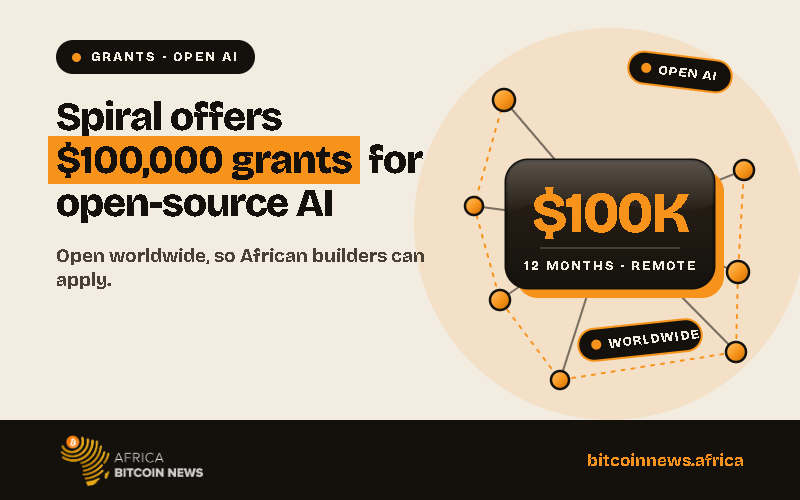
- Show that you can work remotely and deliver over 12 months.
My take
Open intelligence won’t spread evenly on its own. If African builders don’t take part in shaping open AI, others will decide how it works and who it serves. This grant won’t fix that alone, but $100,000 and a year of focus can turn a prototype into something real.
If you have been building in this space, send the proposal.