The Broom vs. The Block: Why Africa is the True Battleground for BIP-110

ADOPTION

Over the last 72 hours, the global Bitcoin community has erupted into what many are calling the “Great Data War of 2026.” The catalyst? A proposal known as BIP-110 (popularly dubbed the “Broom”).
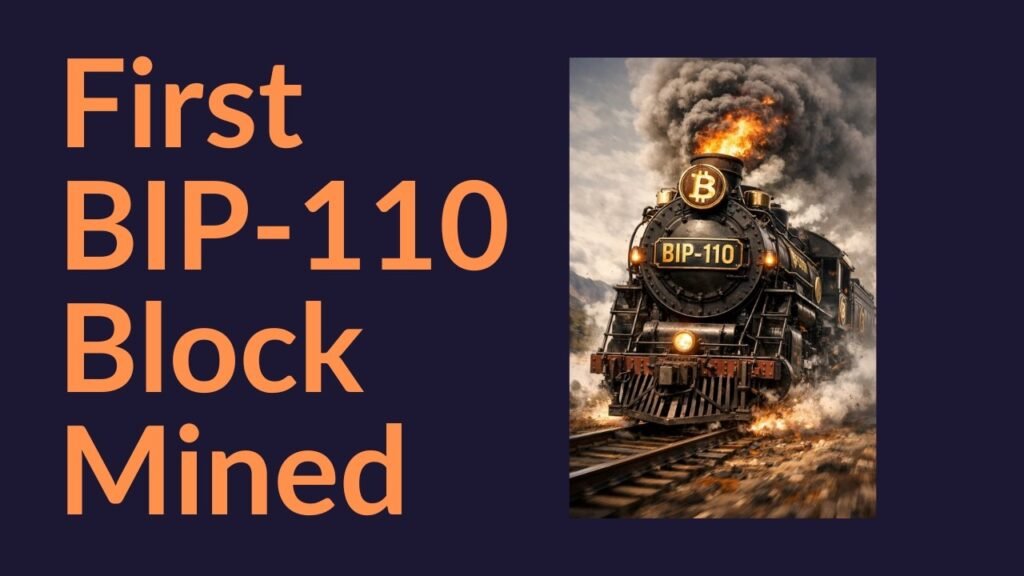
As the first block signaling support for this proposal was recently mined by the Ocean pool, the debate has moved from theoretical “dev-talk” to a looming reality. But while Western influencers argue about JPEG prices, for the African continent, BIP-110 isn’t about art—it’s about the very survival of our financial infrastructure.

The Explainer: What is BIP-110?

BIP-110 is a technical proposal to “sweep” the Bitcoin blockchain clean of non-monetary data. Since early 2023, the network has been flooded with “Inscriptions” and “Runes”—large chunks of data like images, videos, and complex code embedded directly into blocks.

The “Broom” proposes a one-year soft fork that would:

  • Restrict Arbitrary Data: Re-enforce strict limits on how much “junk” data can be stored in a transaction.

  • Lower the Threshold: Unlike the traditional 95% consensus requirement, BIP-110 aims for a 55% hash power trigger, a move that has sparked fears of a permanent chain split.

The African Case for the “Broom”

For those of us building the “Silicon Savannah,” the argument for BIP-110 is purely practical: Efficiency equals Inclusion.

  1. Node Accessibility: In Nigeria or Kenya, the cost of high-speed internet and 2TB+ SSDs is a barrier to entry. By slowing the growth of the blockchain’s size, BIP-110 ensures that an African student can still run a full Bitcoin node on an old laptop or a Raspberry Pi.

  2. The Fee Problem: When “digital artifacts” bid up the price of block space, the cost to open a Lightning Network channel rises. For someone using Machankura or Bitnob, a $5 fee isn’t just an inconvenience—it’s a week’s worth of groceries. BIP-110 promises to clear the “spam” and keep fees low for actual payments.

The Risk: A Permissionless Trap?

However, the proposal isn’t without its critics on the continent. The beauty of Bitcoin has always been its neutrality. If we begin to decide what is “valid” data today, do we risk a future where a small group of miners decides what is a “valid” payment tomorrow?

Some African builders are exploring Bitcoin for decentralized identity (DID) or land titling. If BIP-110 is too aggressive, these local solutions could be swept away alongside the “junk” data it aims to clear.

The 55% Danger Zone

Perhaps the most controversial aspect of BIP-110 is its 55% activation threshold. This deviates from Bitcoin’s “Conservative Consensus” history. If the network splits, we could see two versions of Bitcoin. For a continent currently fighting for currency stability, a split in the world’s most stable digital asset is the last thing we need.

Conclusion: The African Perspective

As the first “Broom-signaling” blocks are mined, Africa finds itself in a unique position. We are the ones who benefit most from a lean, efficient network, yet we are also the ones who most need a network that is impossible to censor.

I believe the signal is clear: We must prioritize Utility over Vanity. If Bitcoin is to be the reserve currency of the Global South, its primary function must remain the peer-to-peer transfer of value—not a global filing cabinet for expensive JPEGs.