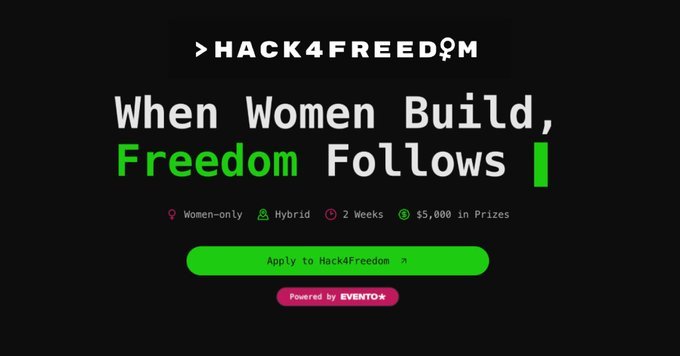
While the global media remains obsessed with Bitcoin’s price charts, a different kind of value is being created on the ground in Africa. The recent Hack4Freedom initiative has proven that the next wave of Bitcoin adoption isn’t coming from institutional traders, it’s coming from African women building open-source tools to solve the continent’s most pressing financial challenges.
From Lagos to Kaduna, a new generation of “Freedom Tech” builders is emerging. These aren’t just developers; they are activists using code to dismantle the barriers of financial exclusion, inflation, and censorship.
The Rise of “Freedom Tech”
The core of the Hack4Freedom movement lies in its commitment to open-source protocols. By leveraging Bitcoin, Lightning, Nostr, and eCash, participants are creating a stack that is resilient to state interference and high banking fees.
In a recent feature on the Stephan Livera Podcast, the team behind Evento—a social coordination app birthed from this ecosystem—detailed how “node-less” Lightning integrations are making Bitcoin payments invisible to the end-user. This is the “leapfrog” moment: bypassing the clunky banking infrastructure of the past for a peer-to-peer future that “just works.”
🏆 The 2026 Innovators: Real Tools for Real Needs
The projects coming out of these hackathons aren’t “cool ideas”—they are functional responses to the African reality.
LightningO: Taking on the 30% “middleman tax” of global freelance platforms. Built on Nostr, it allows Nigerian talent to connect directly with global sponsors and get paid instantly in Sats, with zero banking hurdles.
BitSave: A direct answer to the naira’s volatility. It’s a savings app that lets users hold BTC while tracking goals in their local currency, effectively creating a personal central bank in their pocket.
Bitstra: Solving the daily friction of utility payments. It enables users to buy data, airtime, and pay bills directly via Lightning, removing the need for traditional bank accounts entirely.
Why This Matters for Africa
Africa has the world’s youngest population and some of its highest rates of grassroots Bitcoin adoption. However, for a long time, the continent was seen as a “user” of Western-built technology.
Hack4Freedom changes that narrative. By focusing on female developers, a group often overlooked in the FOSS (Free and Open Source Software) community the initiative is ensuring that the builders of the future look like the people who need the technology most. These hackers are “state-proofing” their communities, creating voluntary systems that continue to function even when traditional institutions fail.
The message from the 2026 Hack4Freedom cohort is loud and clear: Code is a human right. As these projects move from GitHub repositories to the hands of everyday users, they are proving that Bitcoin in Africa isn’t a speculative asset—it’s the infrastructure of freedom.