In August 2026, a flaw in a popular Bitcoin hardware wallet let an attacker sweep roughly 594 Bitcoin, worth about 38 million dollars, out of nearly 500 wallets in a 25 minute window. One weakness, in one brand of wallet, was enough to wipe out hundreds of people’s funds at once. That event has reopened one of Bitcoin’s oldest custody arguments. Should you protect your coins with one key, or with several? Here is where I stand, and why.
What Happened With Coldcard
The hardware wallet at the center of the hack was made by Coldcard. According to a technical breakdown of the exploit, the flaw traced back to firmware shipped by Coinkite in 2021, which caused some devices to generate their secret codes using predictable data instead of true randomness. Ledger’s chief technology officer, Charles Guillemet, warned against rushing into multisig purely as a reaction to a rival’s breach, arguing that adding complexity to a wallet can introduce new risks rather than remove old ones. That caution is reasonable, but it doesn’t hold up against what a single-key wallet actually risks.
Single key or Multisig
A single key wallet puts everything on one secret code. Whoever holds that code controls the coins, and losing it, whether to theft, fire, or a flawed device, means losing everything at once. The design has no recovery path. That is the real weakness the Coldcard incident exposes, and it is why I do not think a return to single-key custody is the right lesson to draw.
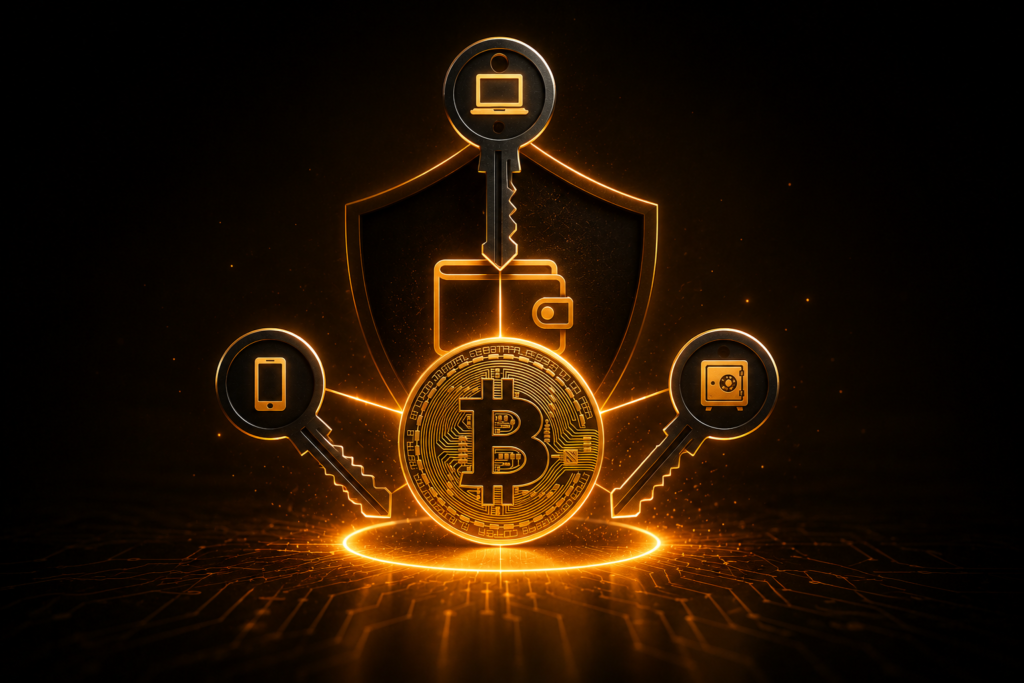
Multisig requires more than one key to move bitcoin, commonly two out of three. Lose one key, and two remain. Steal one key, and the funds are still out of reach. It is the same logic behind keeping a spare of anything essential: redundancy isn’t carelessness; it is protection against the ordinary ways things get lost. But the Coldcard flaw complicates a lazy version of this argument. If all three keys sit on the same brand of device running the same firmware, one flawed update can compromise all three at once, which is close to what nearly happened to the users caught in that sweep.
That gap is why single-brand multisig is not enough on its own. The safer approach is diversifying the multisig itself, spreading the required keys across different hardware brands rather than trusting any one vendor to get everything right. Unchained supports major hardware brands including Ledger, Trezor and Coldcard, and recommends combining two different brands specifically to avoid a single point of failure. The 2025 Bybit hack makes the same point from the other direction, attackers compromised the interface signers used to approve a routine multisig transaction and stole 1.5 billion dollars in a single transfer. Multisig without diversity failed there too. The keys have to be genuinely independent of each other, not just numerous. A do it yourself diversified setup built from three separate hardware devices and a coordinating app is well within reach of a careful individual holder, not just institutions with security teams.
Why This Debate Matter
This argument matters outside the world of hardcore Bitcoin holders too. Nigeria processed over 92.1 billion dollars in Bitcoin and other digital asset value between July 2024 and June 2025, driven largely by inflation and restricted access to foreign currency. For many Nigerians and other Africans, Bitcoin functions as a working defense against a currency that keeps losing value, which makes how that Bitcoin is secured just as consequential as the decision to hold it in the first place.
Custody wallets will keep evolving, but the fate of single key storage looks clearer after Coldcard hack. A single key is a single point of failure, and multisig only delivers real protection when its keys sit on different devices, in different locations, under different hands. For anyone holding Bitcoin for the long term, diversifying the multisig is worth the extra effort it takes to set up.