
Ethiopia Rises to 8th Largest Bitcoin Miner in the World, Securing 2.7% of Global Network Hashrate
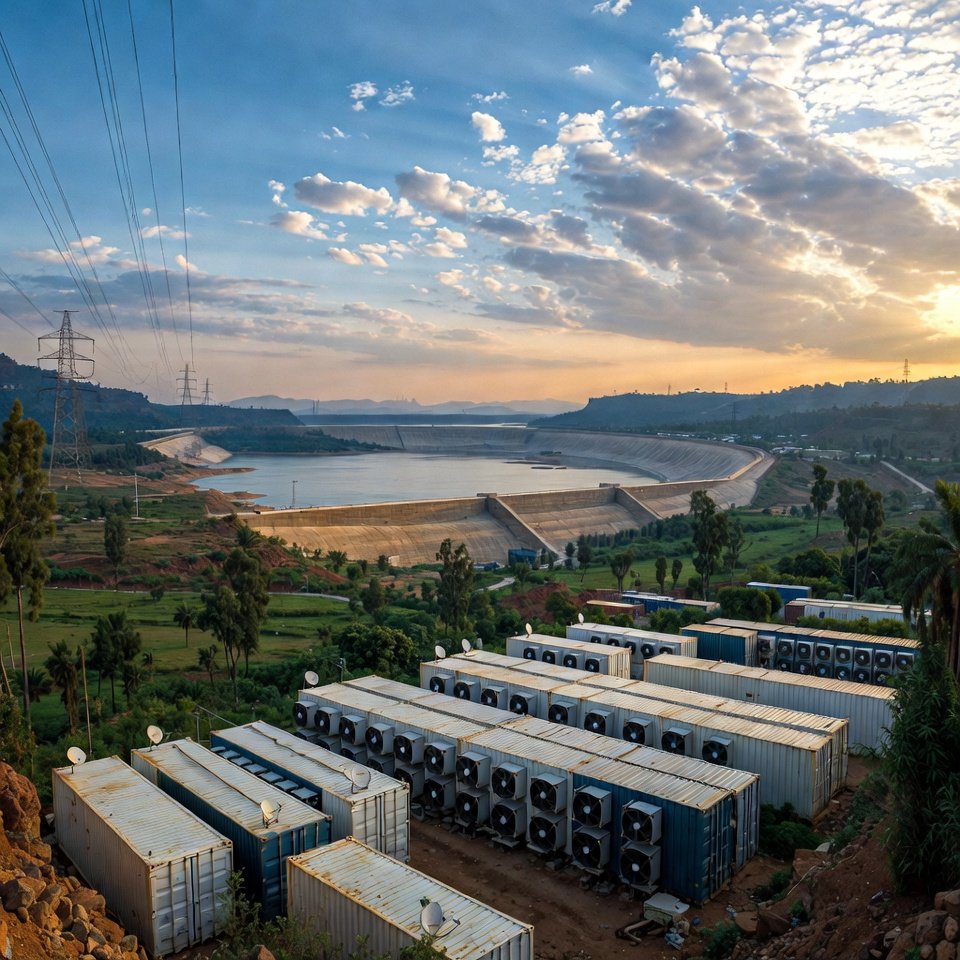
Ethiopia has officially emerged as a global heavyweight in the Bitcoin industry. The nation is now the world’s 8th largest Bitcoin miner, accounting for approximately 2.7% of the entire network hashrate.
According to prominent advocate and miner Kal Kassa, Speaking at a recent event, said that, this milestone means that roughly every 10 minutes, nearly 3% of all freshly minted Bitcoin flows through Ethiopian operations. This follows a rapid climb from 2024, when the country contributed 2.5% of the global total.
Powered by the Blue Nile
The secret behind this surge is Ethiopia’s vast surplus of renewable hydroelectric energy. The Grand Ethiopian Renaissance Dam (GERD)—Africa’s largest hydropower project—provides over 5,000 megawatts of capacity.
Much of this is “stranded energy,” power that would otherwise go to waste because the local grid cannot yet absorb it. Bitcoin mining transforms this excess electricity into immediate economic value.
A Massive Revenue Driver for the State
The economic impact is already visible on the national balance sheet:
-
94 private companies are currently registered as foreign direct investments in the sector.
-
Miners pay roughly $30 million per month to Ethiopia Electric Power (EEP).
-
Bitcoin mining now accounts for 20% of the utility’s total revenue.
-
Projections suggest EEP could see revenue reach $350 million by late 2026.
“This model is scalable,” noted Kassa. He emphasized that miners are essentially “exporting” energy in the form of Bitcoin rewards, monetizing resources that would otherwise dissipate.
The Government Takes a Seat at the Table
The Ethiopian government is moving beyond mere regulation and into active ownership. Ethiopia Investment Holdings, which operates under the Office of the Prime Minister, is set to take a 20-30% stake in new large-scale facilities.
Officials are currently scouting international partners to bring the capital and technical expertise needed for a state-backed national mining initiative.
A “Transition Bridge” to the Future
Despite the rapid growth, Ethiopia Electric Power CEO Ashebir Balcha clarified that this is a strategic phase, not a permanent shift away from domestic needs.
“Until the people have full access and the economy starts to consume this power, we’re using Bitcoin mining as a transition,” Balcha stated. He stressed that domestic electricity needs remain the priority, with mining acting as a productive “bridge” for the current surplus.
As state involvement deepens and more facilities come online, Ethiopia is positioning itself as a global model for how resource-rich nations can turn surplus green energy into a powerful stream of foreign exchange.