
Ethiopia Launches State-Backed Bitcoin Mining Drive, Seeks Global Investment Partners
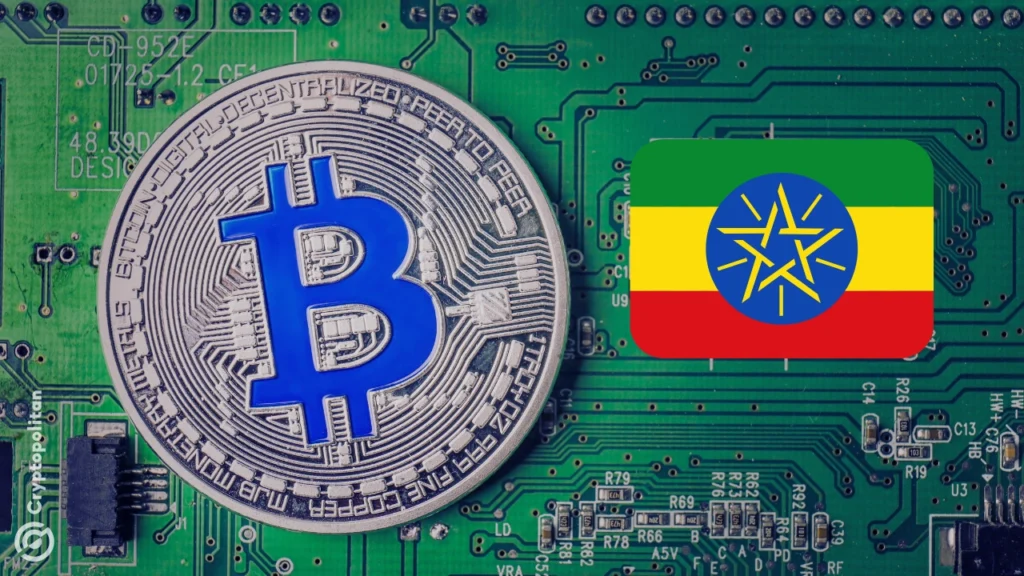
In a strategic push towards digital economic transformation, the Ethiopian government has announced a major initiative to build a state-backed Bitcoin mining infrastructure, actively seeking global investment partners to bring capital, technology and operational expertise to the project. The move, unveiled during the Finance Forward Ethiopia 2026 conference, marks a significant shift in the country’s approach to cryptocurrencies and the digital economy.
Prime Minister Abiy Ahmed, speaking at the high-profile economic forum attended by local and international investors, confirmed that the government is moving beyond merely licensing private miners and intends to participate directly in Bitcoin mining, a sector it believes can generate valuable foreign currency income and drive technological innovation.
At the center of the strategy is Ethiopian Investment Holdings (EIH), the state-owned sovereign investment vehicle, which has been tasked with leading the search for international partners capable of scaling mining operations. These partners are expected to contribute not just funding, but also mining hardware, data center build-outs and long-term technical expertise.
A New Chapter for Bitcoin in Africa
Ethiopia’s announcement places it among a growing list of countries that are actively integrating Bitcoin mining into national economic agendas. While private companies have already established operations in the country for several years, this marks one of the first instances in Africa where a government is pursuing formal participation in Bitcoin mining at scale.
According to industry reports, the country already hosts about 25 licensed Bitcoin mining companies, which collectively contribute roughly 2.5% of the global Bitcoin hash rate — the computing power that secures the Bitcoin network. These operations have generated more than $200 million in revenue, illustrating the economic value of mining activity within Ethiopia.
However, under the new state-backed model, the government aims to capture a greater share of the economic benefits by leveraging its abundant renewable energy resources and existing infrastructure rather than solely earning revenue through electricity sales to private miners.
Harnessing Renewable Power for Mining Growth
A key component of Ethiopia’s strategy is its rich endowment of renewable energy, particularly hydropower. The country’s flagship hydroelectric project, the Grand Ethiopian Renaissance Dam (GERD), along with other hydropower plants, generates vast quantities of low-cost electricity — a critical advantage in energy-intensive Bitcoin mining.
Electricity costs can make or break mining profitability. In markets where power is expensive or unstable, mining operations struggle to turn a profit. Ethiopia’s renewable energy resources, on the other hand, provide a stable and inexpensive supply, positioning the country as a compelling destination for miners looking to reduce energy costs and maximize returns.
Experts believe that by using surplus hydropower that might otherwise go unused or be exported, Ethiopia stands to convert energy resources directly into digital economic value. This is especially significant in a country where access to foreign exchange remains a persistent economic challenge.
Economic Opportunity and Strategic Vision
The government’s Bitcoin mining initiative forms part of the broader “Digital Ethiopia 2030” strategy, a national blueprint aimed at accelerating digital transformation across sectors. The plan prioritizes innovation, digital infrastructure, blockchain integration, and economic modernization — with Bitcoin mining positioned as both a revenue engine and a catalyst for tech ecosystem growth.
Officials argue that partnering with seasoned international mining firms could deliver several long-term benefits, including:
-
Technology transfer and skills development for local engineers and technicians.
-
Job creation in data center operations, energy management and related sectors.
-
Increased foreign direct investment into Ethiopia’s technology and energy industries.
-
Strengthening Ethiopia’s position as a regional hub for digital asset innovation.
Prime Minister Abiy Ahmed has emphasized that the government wants partnerships that ensure a fair distribution of value, with Ethiopia retaining ownership of infrastructure while benefiting from shared operational expertise and revenue.
Balancing Risks and Reward
Despite the optimism surrounding the plan, experts caution that Bitcoin mining carries inherent volatility and operational challenges. The price of Bitcoin — the world’s largest cryptocurrency — can fluctuate significantly, potentially affecting projected revenues from mining. Additionally, high up-front costs for mining rigs and data centers require careful evaluation of return-on-investment timelines.
Environmental concerns also weigh on mining discourse globally, even in renewable energy-rich contexts. While hydropower is a clean source of energy, mining operations still demand significant infrastructure and water resources. Ensuring that mining does not adversely impact other sectors is likely to be a key policy consideration as Ethiopia’s plan advances.
Looking Forward
As Ethiopia embarks on this ambitious project, its success could inspire similar initiatives across the African continent, where countries with untapped renewable energy reserves and young, tech-savvy populations are increasingly exploring digital asset opportunities.
Finding the right blend of government oversight, international expertise, and long-term economic planning will be crucial to realizing the full potential of the venture. With the global Bitcoin mining landscape continually evolving, Ethiopia’s live experiment in state-backed mining may well become one of the continent’s defining digital economy stories in 2026 and beyond.
Bitcoin Mining and South Africa’s Energy Debate