
From Blackouts to Bitcoin: South Africa’s Eskom Is Now Chasing Miners — and Bitmach Is Making It Real
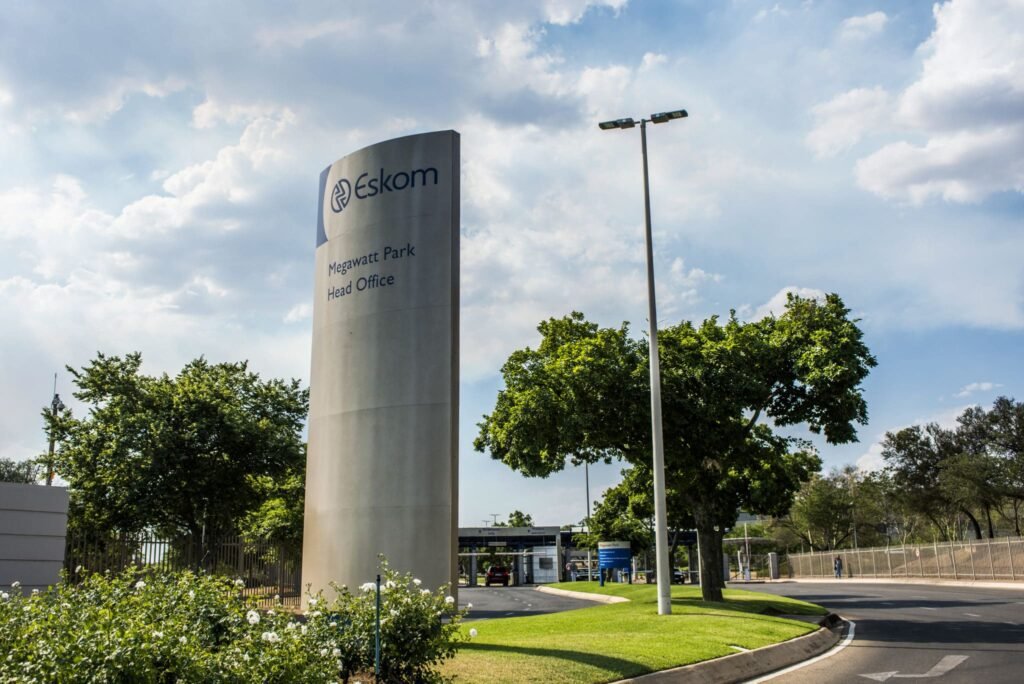
South Africa’s state electricity utility, Eskom, spent the better part of a decade as the continent’s most infamous blackout machine. Rolling power cuts locally called load shedding became a symbol of infrastructure failure. At their peak, they cost the South African economy an estimated R1 billion per day.
So when Eskom’s own chairman and CEO began publicly courting Bitcoin miners as their next major customer base, it was not just a business pivot. It was a signal.
That signal is now becoming a structure. The company at the centre of it is called Bitmach.
The Solar Surplus Nobody Predicted
South Africa’s chronic blackouts pushed millions of households and businesses to install rooftop solar panels. The private solar revolution worked almost too well.
Today, solar generation during daylight hours is outpacing grid demand. As a result, Eskom is sitting on idle electricity it cannot sell.
At the Biznews Conference 2026 in Hermanus, Eskom chairman Mteto Nyati explained the daily pattern clearly:
- Demand spikes in the morning as people wake up and businesses open
- It then drops sharply as rooftop solar panels kick in
- Eskom’s coal and nuclear plants cannot switch off quickly enough
- This leaves surplus electricity stranded — generating costs but no revenue
Nyati’s solution? Sell that surplus power to Bitcoin miners at a discount.
Eskom CEO Dan Marokane has echoed this position. He describes Bitcoin mining, AI infrastructure, and data centres as the utility’s next growth frontier. Moreover, he sees them as critical to managing a ZAR 403 billion debt burden that threatens Eskom’s long-term survival.
Enter Bitmach — the Infrastructure That Changes Everything
What makes this story relevant today is not just Eskom’s intention. It is the operational plan now sitting behind it.
Bitmach is a new venture co-founded by three South Africans:
- Stafford Masie — tech entrepreneur and Bitcoin advocate
- Rob Herzov — businessman and strategic backer
- Carel de Jager — CEO of Silver Sixpence
Masie publicly unveiled Bitmach at the Adopting Bitcoin Conference in Cape Town earlier this year. Importantly, Bitmach is not a traditional mining company. It is a demand-response infrastructure company — and that distinction matters enormously.
Traditional industrial energy users like aluminium smelters need days of advance notice before reducing consumption. Bitmach turns that dynamic completely on its head. Bitcoin miners can be switched off and back on instantaneously. This means Eskom can:
- Direct up to 5 gigawatts of surplus power to Bitmach during peak solar hours
- Pull that power back the moment grid conditions change
- Do all of this with zero delay and no damage to operations
For a utility trying to balance an increasingly unpredictable grid, that flexibility is not just valuable. It is unprecedented.
Why This Matters for Bitcoin in Africa
This story is bigger than South Africa’s electricity problems. It is a proof of concept for what Bitcoin mining can do across the continent.
The model mirrors what is already happening in Kenya and Ethiopia. There, companies like Gridless Compute mine Bitcoin using off-grid renewable energy sources, including:
- Geothermal power
- Hydroelectric power
- Biomass energy
Meanwhile, those same operations fund rural electrification for communities that previously had no power access. Bitcoin mining is not competing with households for electricity. Instead, it is monetising energy that would otherwise go to waste.
Eskom’s pivot applies that same logic at national scale. South Africa’s Integrated Resource Plan projects 28.7 gigawatts of new solar capacity by 2039. As that capacity comes online, the surplus problem will deepen. Therefore, the commercial case for Bitcoin mining as a permanent grid-balancing solution will only grow stronger.
There is also a broader signal here for African governments still watching from the sidelines. Bitcoin mining is often dismissed on the continent as a foreign speculation tool or an energy hazard. However, what Eskom and Bitmach are demonstrating is something different. At its core, Bitcoin mining is a flexible energy buyer. It offers governments and utilities something traditional industry cannot:
- It can be switched on or off in seconds
- It pays for power that has no other customer
- It generates revenue in a globally liquid, hard asset
That reframe matters directly for countries like Nigeria, Ghana, and the DRC. All three sit on energy surpluses tied to hydro, gas, or solar projects that underperform on revenue. Bitcoin mining offers a direct and proven solution to that problem.
What Comes Next
Bitmach is still in its early stages. Eskom has not yet publicly confirmed formal commercial agreements with miners. The financial model also depends on finding a power price that covers Eskom’s marginal generation cost while remaining attractive to miners — a tight margin requiring careful negotiation.
But the direction is clear. The chairman has spoken publicly. The infrastructure company has been built. The grid dynamics make the commercial case on their own terms.
For Africa’s Bitcoin community, the question is no longer whether nation-scale Bitcoin mining is viable on the continent. South Africa is answering that question right now.