From Bitcoin Education to Building Solutions: 30 Young Developers Complete a Five-Day Bootcamp in Gitega
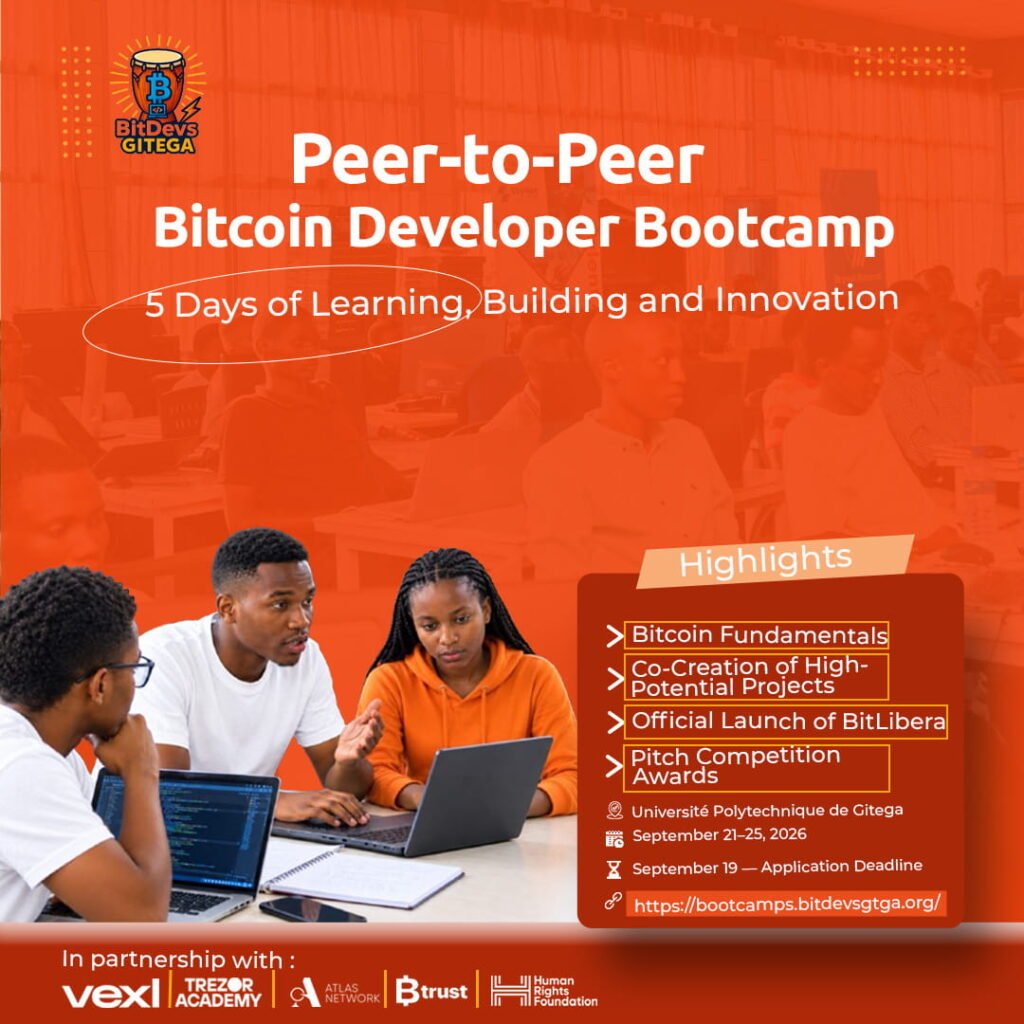
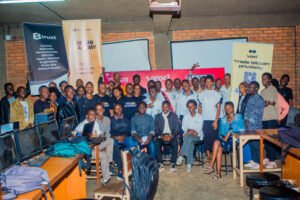
Thirty students from the Faculty of Information and Communication Technologies at the Polytechnic University of Gitega (UPG) have completed a five-day intensive bootcamp focused on Bitcoin, Lightning, cybersecurity, software development and the creation of innovative financial and digital solutions adapted to the Burundian context.
Organized by BitDevs Gitega, an initiative supported by the Free Tech Institute (FTI), the bootcamp brought together students, developers, technology practitioners and ecosystem builders for five days of hands-on learning, experimentation and building.
More than a traditional training programme, the bootcamp was designed as a journey from learning to building. Participants explored Bitcoin infrastructure, experimented with Lightning technologies, developed prototypes and considered how open financial technologies could address real-world challenges.
Five Days of Bitcoin and Lightning Education
Throughout the programme, participants explored the technical foundations of Bitcoin and its surrounding ecosystem.
Training included practical sessions on:
- Bitcoin fundamentals and Bitcoin Core
- Running and interacting with Bitcoin nodes
- The Lightning Network
- Lightning SDKs and applications
- Peer-to-peer technologies
- Software development
- Cybersecurity and data protection
- Building solutions adapted to local needs
Participants were encouraged to move beyond theory and experiment directly with the technologies they were learning.
A major focus of the programme was also on the realities of Burundi.
Rather than simply learning how existing technologies work, participants were encouraged to consider a more practical question:
How can these technologies be used to build solutions that are useful, accessible and secure for people in the local context?
This approach combined technical education with teamwork, experimentation and product development.
Making Security Part of the Building Process
Cybersecurity and data protection formed an important part of the programme.
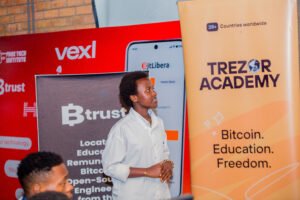
During the third day, Ildegard Christian Bimenyimana, Head of Information Security, Business Continuity & Data Protection, joined participants to share insights on cybersecurity, information security, data protection and business continuity.
His session reinforced an important principle for the young developers: building financial and digital applications is not only about creating functionality. Security must be considered from the beginning of the development process.
For developers working on transaction-related applications, understanding how to protect users, data and digital assets is an essential part of responsible innovation.
Read more about the cybersecurity session on LinkedIn.
From Learning to Building
The second half of the programme focused heavily on development.
Working in teams, participants transformed knowledge gained during the training into prototypes and explored different approaches to building peer-to-peer solutions.
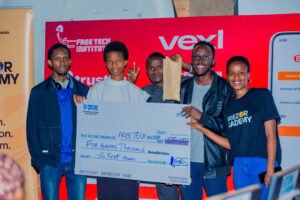
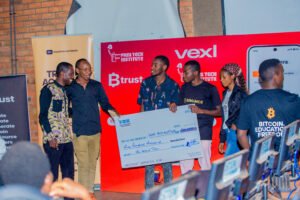
The programme culminated in a Demo Day and pitch competition, where teams presented their projects and demonstrated the solutions they had developed.
At the end of the competition, two projects were recognized and awarded for their innovation and creativity.
The competition was not simply about presenting finished products. Participants had to demonstrate their ability to:
- Identify a real problem
- Develop an appropriate technical solution
- Work effectively as a team
- Turn an idea into a working prototype
- Communicate the value of their solution
BitLibera Officially Launches During the Bootcamp
Another highlight of the final day was the official launch of BitLibera, a startup co-founded by Barakana Guy Eudes and Advaxe Ndayisenga.
The launch added a practical dimension to the bootcamp by showcasing a solution being built in Burundi to address fragmentation between different payment infrastructures.
BitLibera is built around the vision of creating open financial infrastructure developed locally in Burundi.
Its architecture seeks to create a bridge between decentralized monetary protocols, including the Lightning Network, and traditional mobile-money networks such as Lumicash.
At the centre of the infrastructure is the BitLibera Exchanger, a software gateway designed to connect different payment rails and give users and developers more flexible ways of moving value.
The platform is accessible through exchanger.bitlibera.com.
For developers and entrepreneurs participating in the bootcamp, BitLibera provided an example of how technical knowledge developed through communities, experimentation and developer education can eventually become a real product.
Its launch also highlighted the opportunity for African developers to build local infrastructure rather than simply consume technologies developed elsewhere.
Growing a Developer Ecosystem in Burundi
The bootcamp brought together more than students.
Developers and members of the broader technology ecosystem contributed throughout the programme, sharing technical knowledge, practical experience and perspectives on building with Bitcoin and Lightning.
This interaction between students and experienced developers created an environment where participants could ask questions, experiment with unfamiliar tools and receive feedback while developing their projects.
It also demonstrated the value of connecting education, developer communities and entrepreneurship.
A student can move from learning how a Bitcoin node works to experimenting with an application, developing a prototype and eventually contributing to a product designed for a real market.
A Collective Effort Behind the Programme
The five-day programme was made possible through the contributions of several organizations and individuals.
Special appreciation goes to Trezor Academy and the Atlas Network, whose support contributed to the first three days of training.
The programme also received support from:
- Vexl
- Btrust
- Human Rights Foundation (HRF)
Their support for the hackathon component helped participants move from technical education to experimentation and prototype development.